Rope Coil Guide: Tangle-Free Storage Technique for Electricians & Utility Work
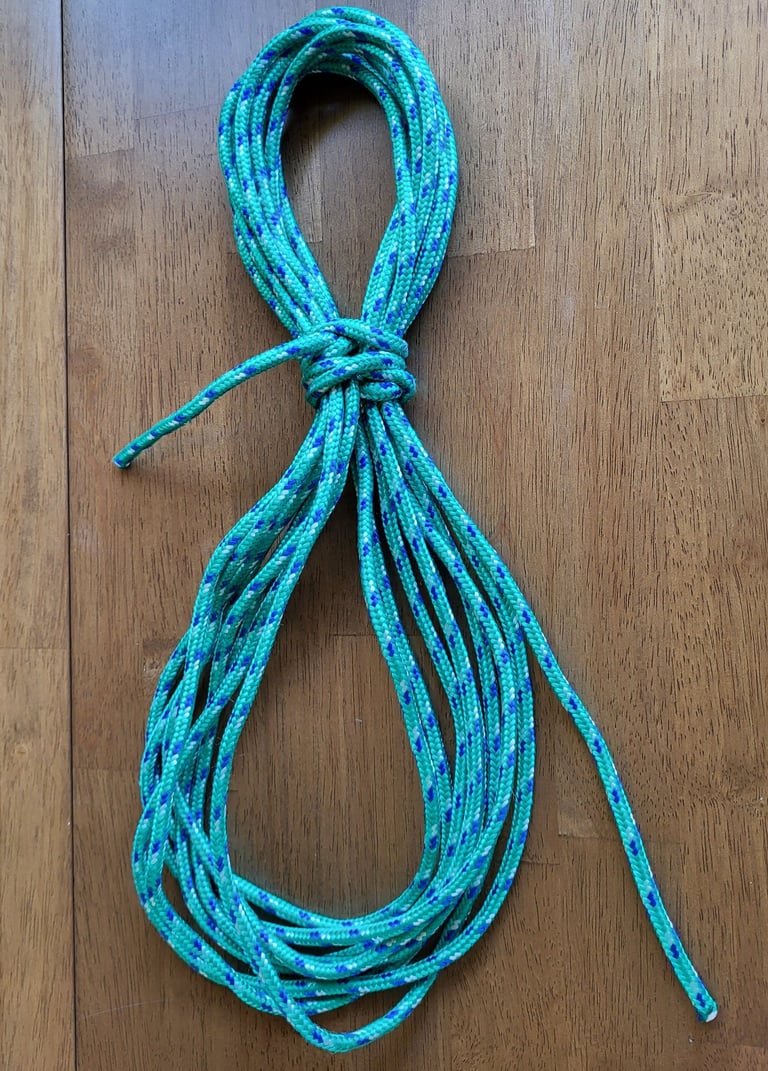
The standard Rope Coil is a fundamental material management technique designed to keep utility lines, handlines, and cords organized, compact, and ready for immediate deployment. Operating on the principle of nested, parallel loops secured by a locking wrap, this coiling method relies on a clean finish that prevents the line from twisting or knotting while in transit or storage. Its real beauty lies in its efficiency: when properly executed, the coil holds its shape perfectly under rough handling, yet it releases smoothly when you are ready to throw or flake out the line on the job site. It essentially acts as a reliable, hardware-free management system for cordage of any size.
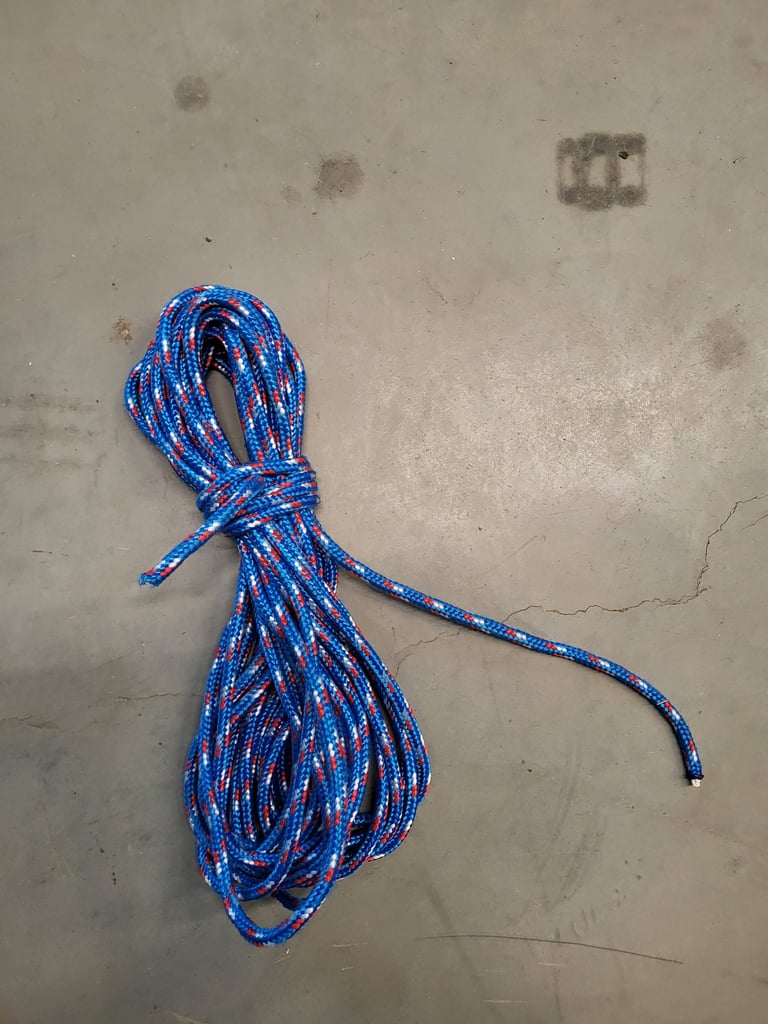
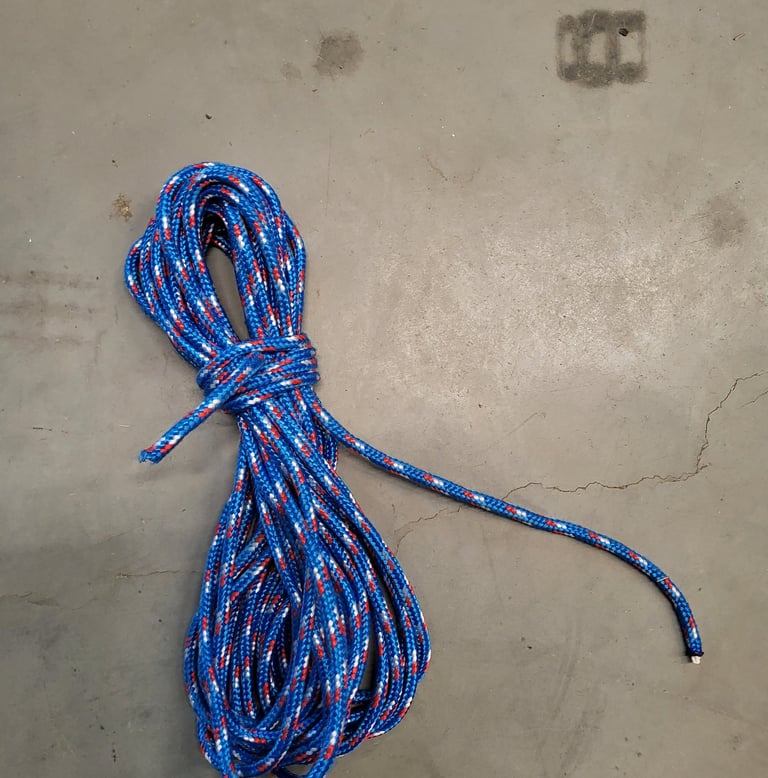
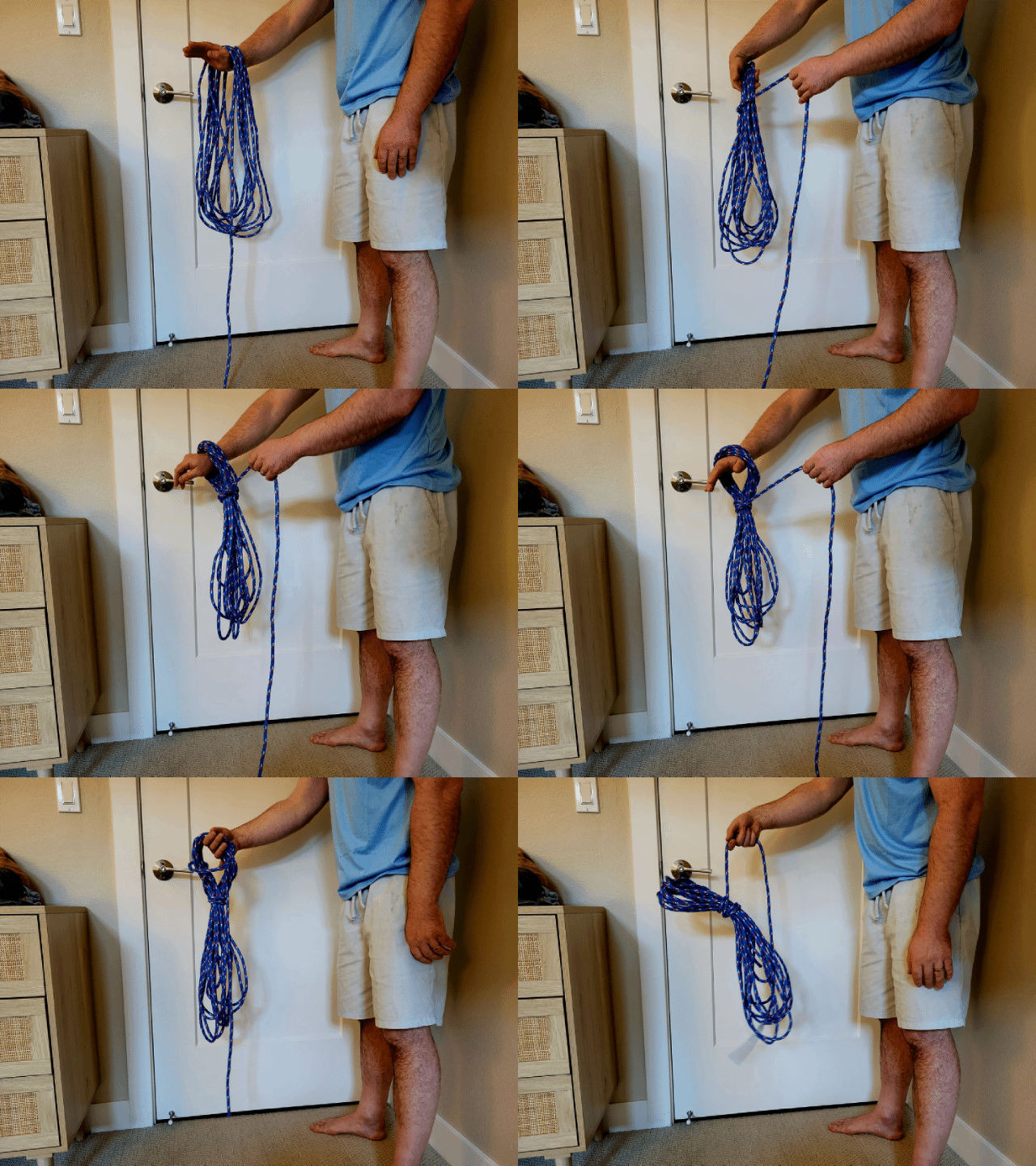
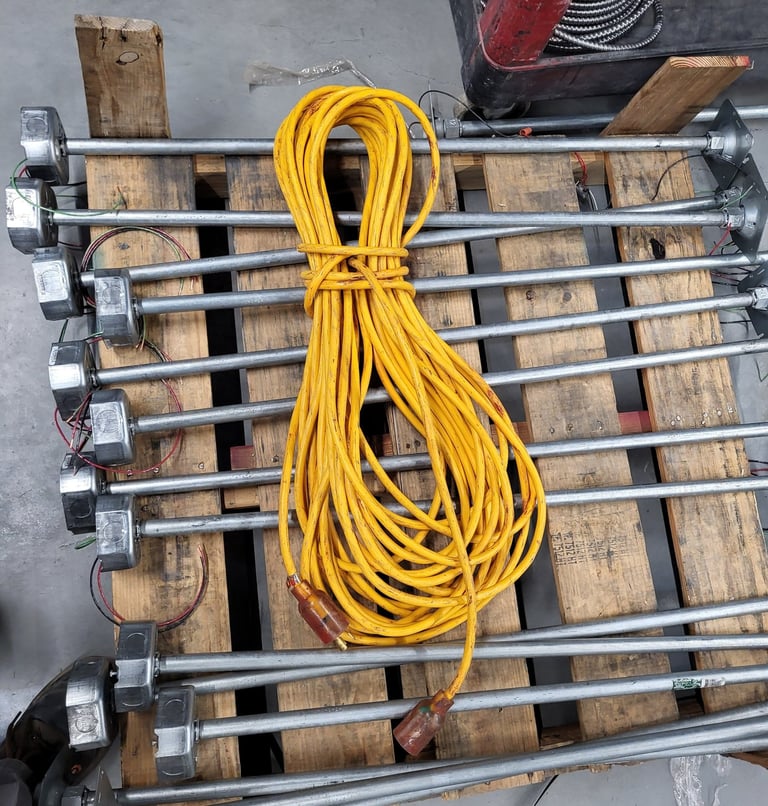
How to Tie the Rope Coil
Gather the rope into clean, uniform circular loops, leaving a generous length of the final tag end hanging free to create your locking wraps.
Slide the hand that is holding the main loops completely through the center of the coil to support it from the inside.
Grab the loose tag end with your free hand and begin rotating the coil to wrap the tag end tightly around the outside of the main bundle, aiming to place these wraps in the upper third of the coil.
Complete a minimum of three tight wraps around the bundle, adjusting the number of wraps to neatly use up any remaining length of your tag end.
Reach through the center of the coils right above your new wraps with your holding hand, grab the tag end, and pull a small loop (bight) through to the inside.
Flip this loop completely over the very top of the main coil structure, then pull down firmly on the remaining tail of the tag end to cinch the loop tight against your wraps
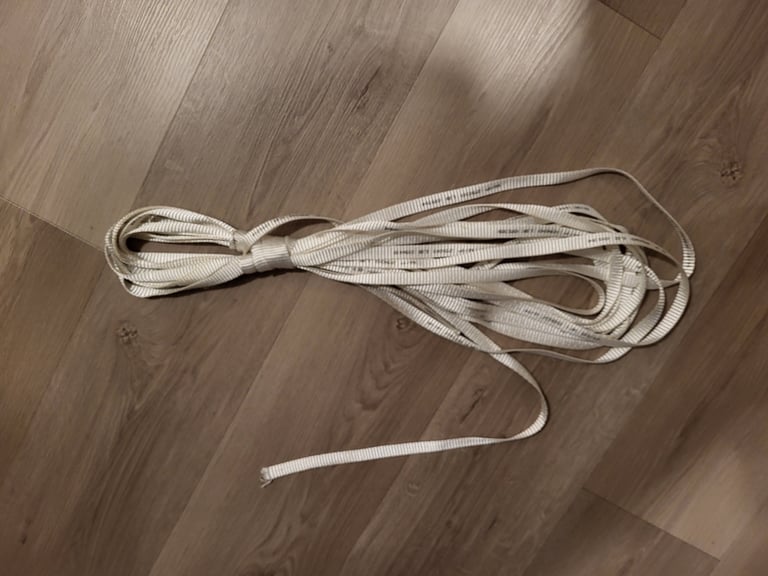
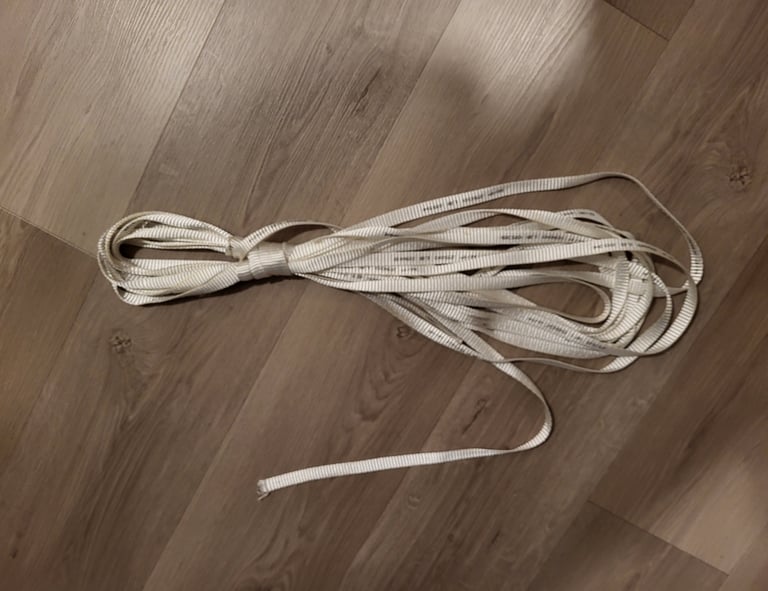
Uses for Electricians and Construction
In commercial and industrial electrical work, proper rope and cord management saves massive amounts of time and frustration. Because this coiling method creates an incredibly stable, self-contained bundle, it serves as a daily standard across a variety of field applications:
Storing Lineman Handlines: Ideal for managing heavy-duty utility handlines, ensuring the rope stays clean, untangled, and ready to be packed into service trucks or hung from a tool belt.
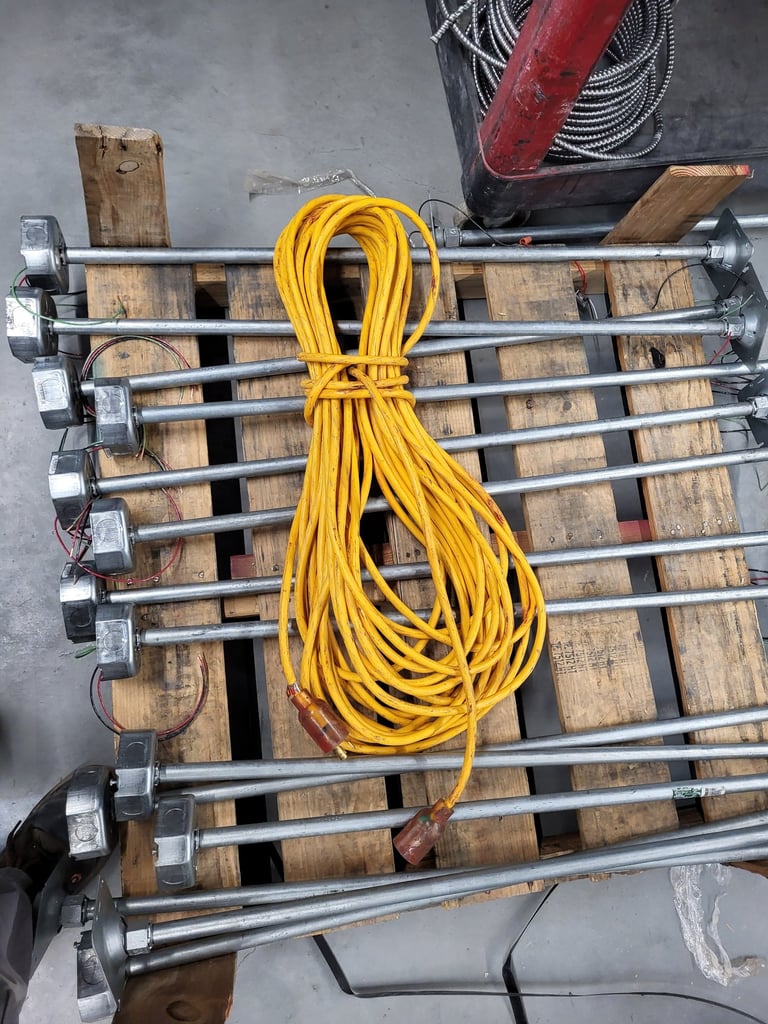
Extension Cord Management: Works exceptionally well for medium and heavy-duty extension cords, protecting the inner conductors from excessive twisting while keeping the bundle perfectly neat.
Managing Pulling Ropes: Used to store high-tensile jet line, mule tape, or synthetic wire-pulling ropes between pulls, preventing the nesting that leads to disastrous knots mid-pull.
Organizing Small-Gauge Stranded Wire: Excellent for keeping partial spools or loose bundles of stranded building wire from unraveling into a bird's nest inside your job box.
A Bit of History
The traditional method of finishing a coil with a wrapped neck and a locked bight has deep roots in early maritime seamanship and utility line-work, evolving alongside the necessity for rapid, tangle-free line deployment. Sailors and early power linemen both quickly realized that simply coiling a line in loose loops would inevitably lead to severe tangles under chaotic working conditions. This specific variation—frequently favored by veteran linemen—was passed down through generations of utility workers as the gold standard for maintaining handlines on utility poles. Over the decades, tradesmen adopted and refined the technique for onshore industrial construction, recognizing that the exact same mechanics used to keep heavy marine rigging secure worked perfectly for managing rugged electrical cordage on a fast-paced job site.
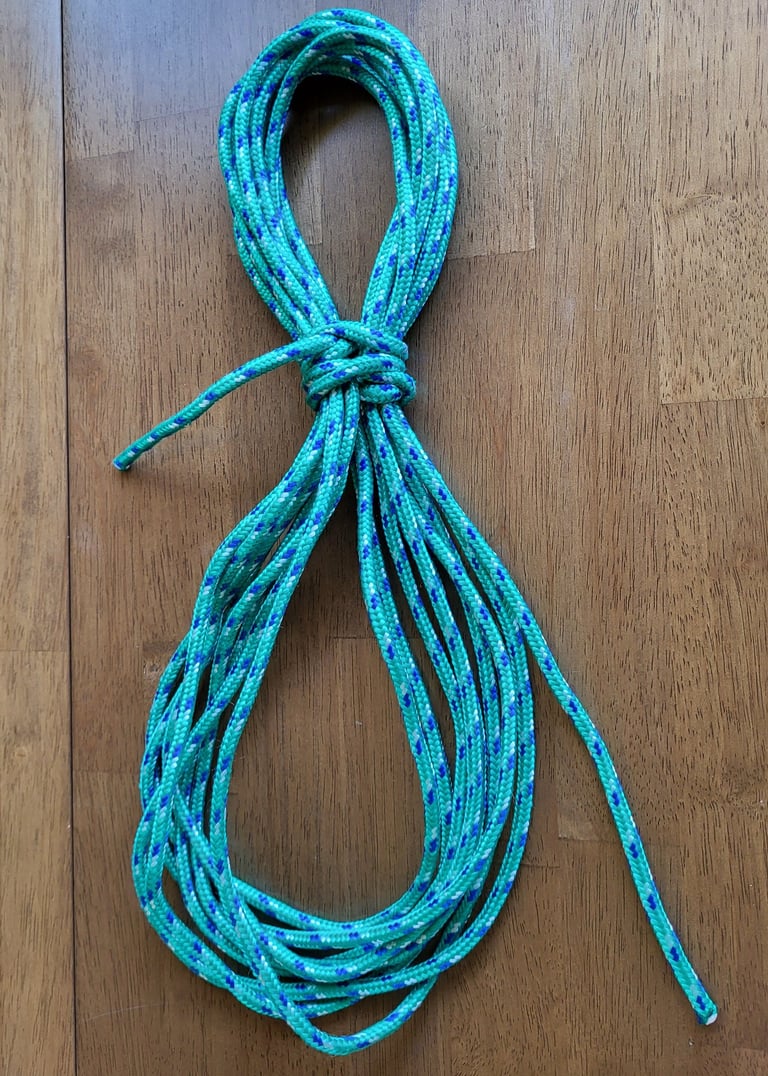
Summary and Alternative Techniques
Whether you are packing up a heavy extension cord at the end of a shift or prepping a utility handline for an overhead pull, the standard Rope Coil delivers reliable, tangle-free organization with zero storage hardware required. It is a quick, dependable solution for any scenario where lines need to be transported frequently but must flake out smoothly on demand.
However, depending on your cordage material and deployment requirements, you might want to look at alternative management methods. For long, high-diameter wire-pulling ropes that are prone to severe hockling (twisting), the Over-Under Coiling method offers an alternating technique that completely neutralizes internal rope twist. This is also a solid method for wrapping up cables that have a lot of memory and twist easily. Conversely, if you are dealing with short, lightweight cords that need to be unraveled instantly with a single pull, the Quick-Release Chain Stitch (or daisy chain) provides an excellent, fast-deploying alternative.
Safety Disclaimer: ⚠️ Material Handling Only
The knots and techniques demonstrated on this site are intended strictly for material handling, wire pulling, and equipment securement. > Never use these hitches and knots for life safety, fall protection, or overhead lifting of loads where a failure could result in injury or death. Always use OSHA-compliant, load-rated hardware (harnesses, shackles, and slings) for critical lifts. Your safety team is there for a reason—consult them for high-risk tasks. Master the craft, stay out of pinch points, respect the load, and live to tie knots another day.
Questions or tips? Reach out anytime. I would love to hear about new knots and techniques.
Check out my YouTube channel for knot tying, rigging tips, and other electrician related tutorials.
© 2025. All rights reserved.
I made this website by myself with Hostinger Website Builder. Try it and start building your idea, today.