Jam Hitch: A Top-Notch Bundling Knot


The Jam Hitch is an exceptionally efficient friction hitch designed to lock down tight under tension and stay there. For trade professionals and electricians, it serves as an indispensable binding knot for bundling conduit, securing cable coils, or locking down a load before applying a final wrap or tie-off.
It functions as a binding knot (or "packet knot"), meaning it holds its tension perfectly even after you let go of the working end, preventing the material from springing back.


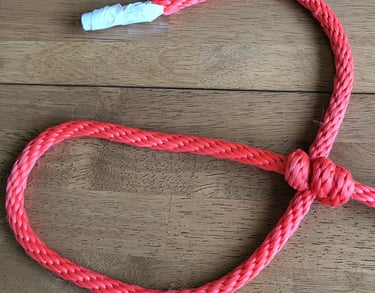
History of the Jam Hitch
Historically, the Jam Hitch (also known as a Jam Knot) has its roots in traditional campcraft, logging, and packaging, where it was primarily used as a binding knot to secure parcels or bundle wood. It is a close relative of the packer's knot and various friction hitches used in forestry, valued because it could be tied quickly using rough, natural fiber ropes. Over time, its utility caught on in the heavy construction and electrical trades, where its ability to bite into modern synthetic cords and slick cable jackets made it a practical field solution for material handling.
How to Tie the Jam Hitch
A Jam Hitch is a reversed Tautline Hitch and is basically tied the same way, except turned around.
Pass the working end of the rope completely around the object or bundle of cables you want to secure.
Bring the working end over to the standing line and make two full turns (a round turn) around it, wrapping downwards away from the bundle.
Bring the working end back up and make one final turn above the previous wraps, tucking the end through the loop created in the same direction.
Pull the working end to tighten the internal structure of the knot, then slide the entire hitch down the standing line toward the load. Pull the standing line firmly to "jam" the knot securely against the bundle.
Uses for Electricians and Construction
On an industrial job site, the Jam Hitch is a go-to choice for managing and staging materials. Electricians frequently use it to bundle conduit, uni-strut, or allthread together before moving them around or shipping them to the site. It is equally valuable for wrapping heavy coils of wire or large scrap bundles to keep them tightly bound during transport. Because it maintains its grip without requiring constant tension on the tail end, it allows a solo worker to easily cinch a bundle tight, free up both hands, and finish tying off the load. It also works well for tying extension cords or temporary power cables to structural members in order to keep them off the floor.


Summary and Links to Alternative Options
Overall, adding the Jam Hitch to your field toolkit ensures you can quickly and securely manage materials on any job site. Its self-locking design takes the hassle out of bundling, making it a reliable, time-saving technique for any professional. If the Jam Hitch isn't quite what you need for your specific setup, consider these alternative options:
Woodlands ZipTie Knot – Offers an quick and strong grip for semi-permanent bundles, and is much easier to untie.
Rolling Hitch Ziptie– A similar binding knot that utilizes a reversed Midshipman’s Hitch for a even more aggressive bite than the Jam Hitch.
Arbor Knot – A quick, classic choice for securing a rope to wire spool or a grabbing a quick bundle of pipe when you need speed rather than a self-locking jam.
For A full comparison of zip-tie knots, check out this article: https://electricianknots.com/zip-tie-knots-binding-power-and-cinch-dynamics
Safety Disclaimer: ⚠️ Material Handling Only
The knots and techniques demonstrated on this site are intended strictly for material handling, wire pulling, and equipment securement. > Never use these hitches and knots for life safety, fall protection, or overhead lifting of loads where a failure could result in injury or death. Always use OSHA-compliant, load-rated hardware (harnesses, shackles, and slings) for critical lifts. Your safety team is there for a reason—consult them for high-risk tasks. Master the craft, stay out of pinch points, respect the load, and live to tie knots another day.
Questions or tips? Reach out anytime. I would love to hear about new knots and techniques.
Check out my YouTube channel for knot tying, rigging tips, and other electrician related tutorials.
© 2025. All rights reserved.
I made this website by myself with Hostinger Website Builder. Try it and start building your idea, today.