Rolling Hitch Zip Tie Guide: Heavy-Duty Reusable Rope Cinch
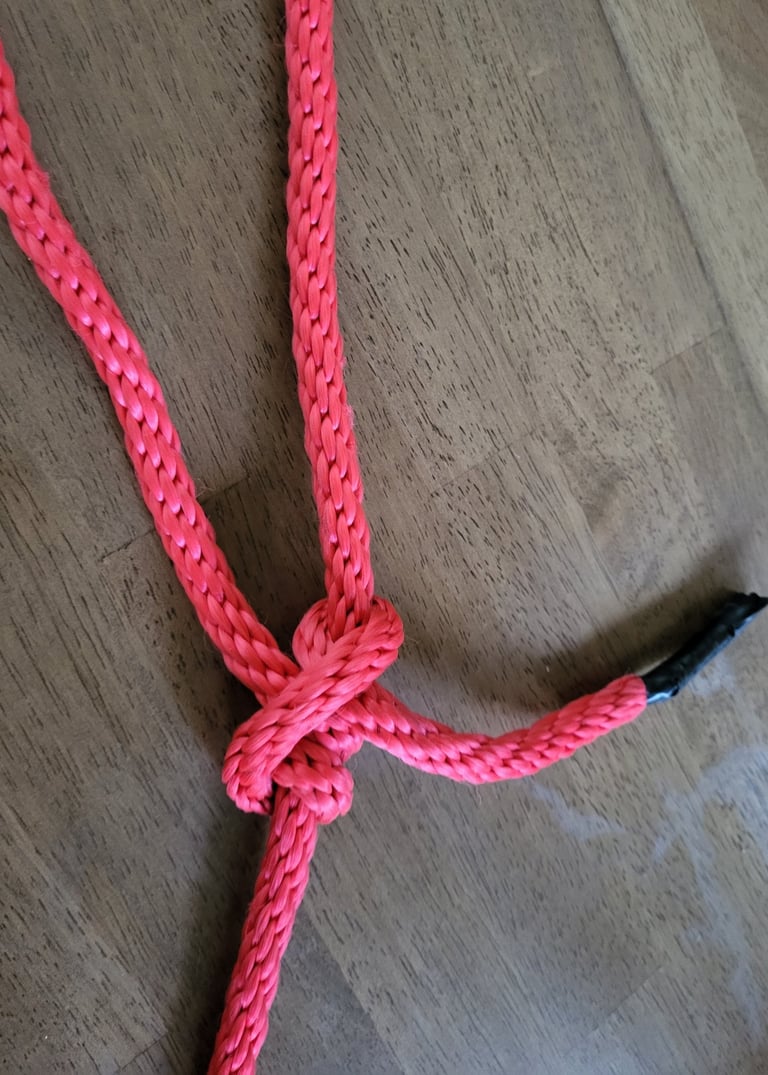
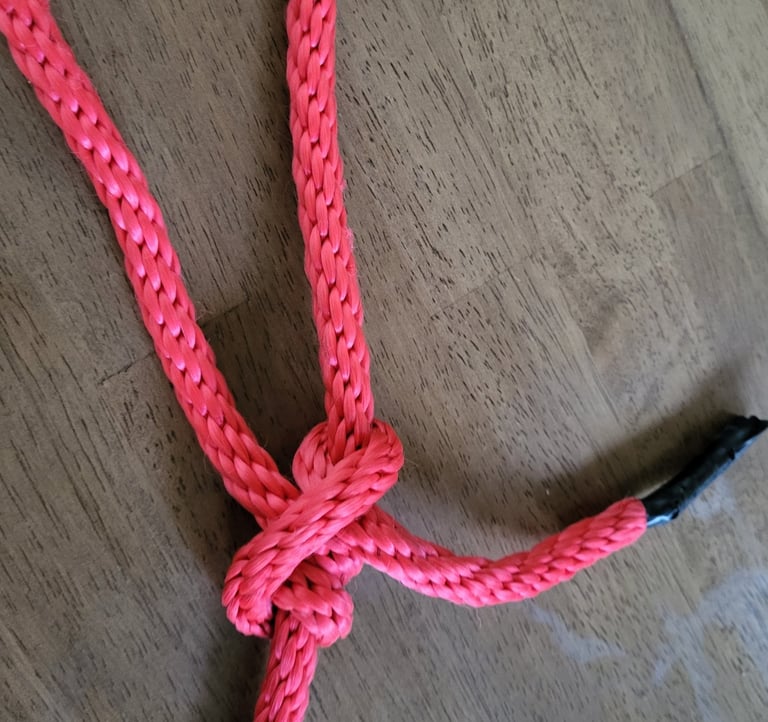
The Rolling Hitch Zip-Tie is a powerful gripping knot that represents the strongest configuration in the family of reverse-friction binding hitches. While standard adjustable loop knots (like the Midshipman's or Tautline) are designed to slide along their own standing line to change a loop's size, reversing these structures flips their mechanics entirely. Tied in reverse, the knot ceases to be a sliding loop and instead becomes a brutal, unidirectional binding tool. The Rolling Hitch Zip-Tie relies on an internal locking structure that allows line to be pulled tight in one direction but jams instantly when force is applied in reverse, functioning exactly like a heavy-duty, reusable rope zip-tie.
Summary and Alternative Hitches
Whether you are consolidating an unwieldy bundle of heavy-gauge feeders or locking down a rack of conduit on a staging pallet, the Rolling Hitch Zip-Tie delivers massive clamping force with zero hardware required. It is an exceptional tool for heavy-duty binding tasks because it can be cinched down with maximum effort and will not slip backward when you let go. However, depending on your material size and how much gripping power your cordage requires, you might look at other variations in the binding knot family:
Jam Hitch (Tautline Reversed): For general-purpose bundling of materials where a mid-range grip is sufficient, this variation flips the standard Tautline configuration to create a highly dependable, everyday binding tool.
Woodlands Ziptie: A great way to gather loose material, hang a heavy coil of wire, or even hold up your pants.
Midshipman's Hitch: If you need the line to form an adjustable loop that slides smoothly along itself to tension a distant anchor point—rather than cinching down flat against a bundle—utilize the Midshipman's Hitch instead.
Uses for Electricians and Construction
In commercial and industrial electrical work, the Rolling Hitch Zip-Tie is an invaluable asset when you need to quickly exert solid pressure to bind, cinch, or bundle materials securely without relying on plastic zip-ties or mechanical clamps:
Conduit and Strut Bundling: Ideal for cinching tight bundles of metal or PVC conduit, channel strut, or all-thread rod. While staging materials, this hitch keeps them locked tight so they won't roll or shift during transport.
Heavy-Duty Cable Management: Used to bundle large, high-voltage feeder cables together inside cable trays or pull boxes before permanent supports are installed.
Cinching Wire Pulling Sleeves: Perfect for securing protective sleeves or wrapping rags around heavy wire conductors to protect them from friction damage as they enter a conduit run.
Material Securing and Staging: Excellent for binding loose construction equipment, ladders, or scaffold planks together on a flatbed or pallet, ensuring the bundle cannot back out or loosen under vibration.
How to Tie the Rolling Hitch Zip-Tie
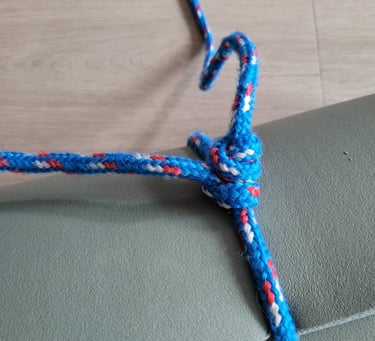
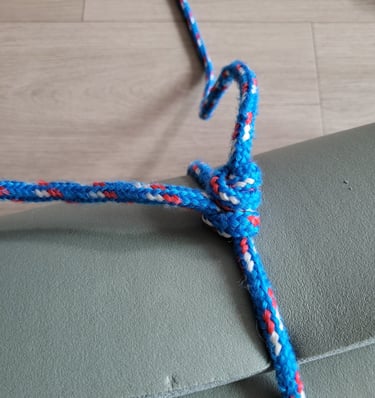
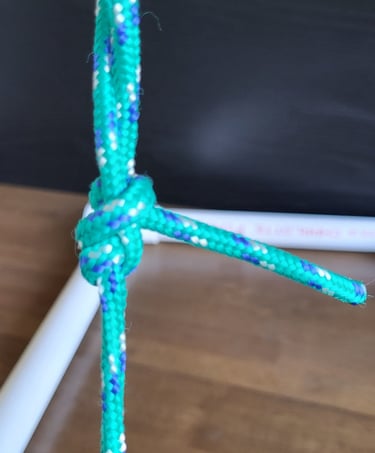
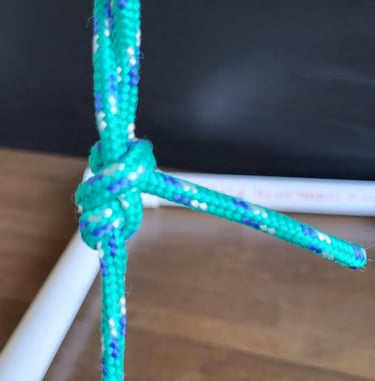
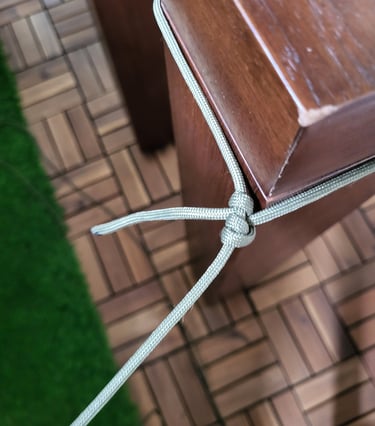
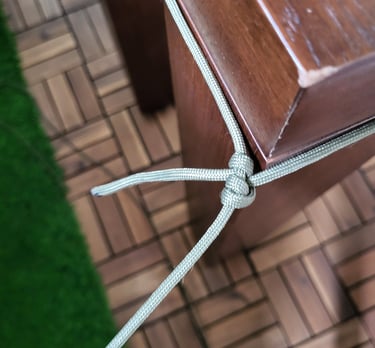
Pass the tag end of the rope completely around the bundle of material you want to secure to form your initial wrap.
Bring the tag end around the bundle a second time, crossing it over your first wrap on the inside. This crossing turn creates the "awning hitch" geometry that forms the core of the knot's relentless gripping mechanism.
Take the tag end and make a third turn around the bundle, keeping it parallel and tucked tightly next to the second wrap.
Bring the tag end across the front of the structure and pass it behind the standing line, moving away from the main bundle.
Tuck the tag end through the loop you just created to form a clean, external Half Hitch.
Pull down hard on the standing line to cinch the zip-tie tight around your materials; the internal wraps will bite into the bundle and jam securely, preventing the rope from backing out.
Safety Disclaimer: ⚠️ Material Handling Only
The knots and techniques demonstrated on this site are intended strictly for material handling, wire pulling, and equipment securement. > Never use these hitches and knots for life safety, fall protection, or overhead lifting of loads where a failure could result in injury or death. Always use OSHA-compliant, load-rated hardware (harnesses, shackles, and slings) for critical lifts. Your safety team is there for a reason—consult them for high-risk tasks. Master the craft, stay out of pinch points, respect the load, and live to tie knots another day.
Questions or tips? Reach out anytime. I would love to hear about new knots and techniques.
Check out my YouTube channel for knot tying, rigging tips, and other electrician related tutorials.
© 2025. All rights reserved.
I made this website by myself with Hostinger Website Builder. Try it and start building your idea, today.