Cow Hitch (Lark's Head)
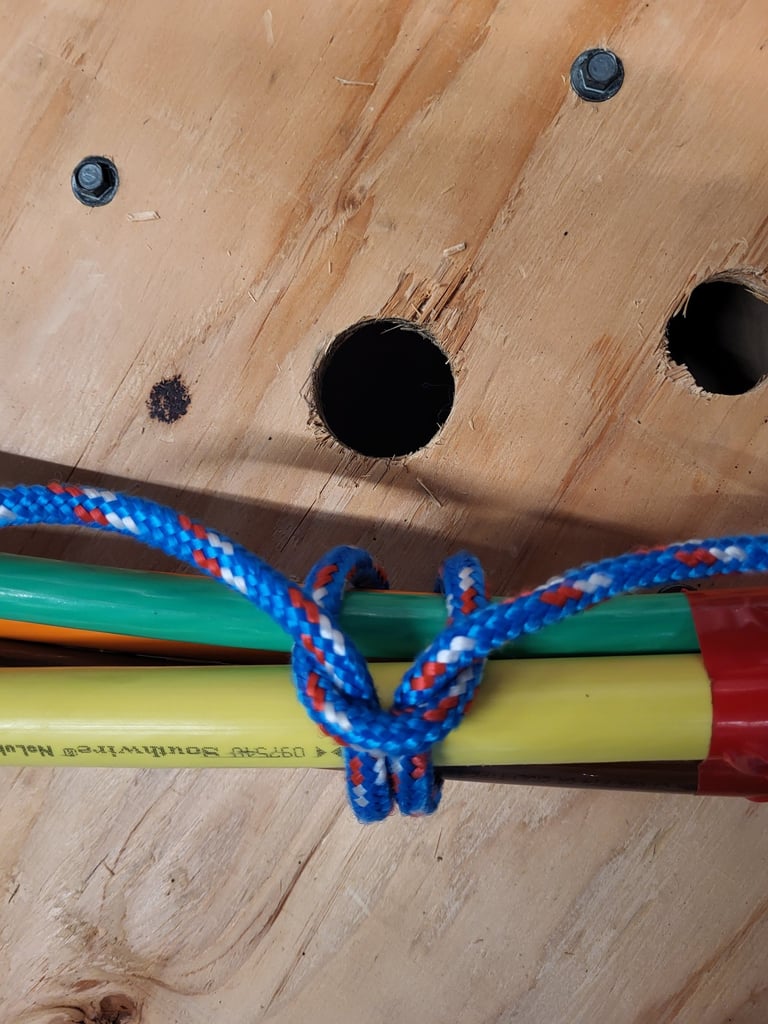
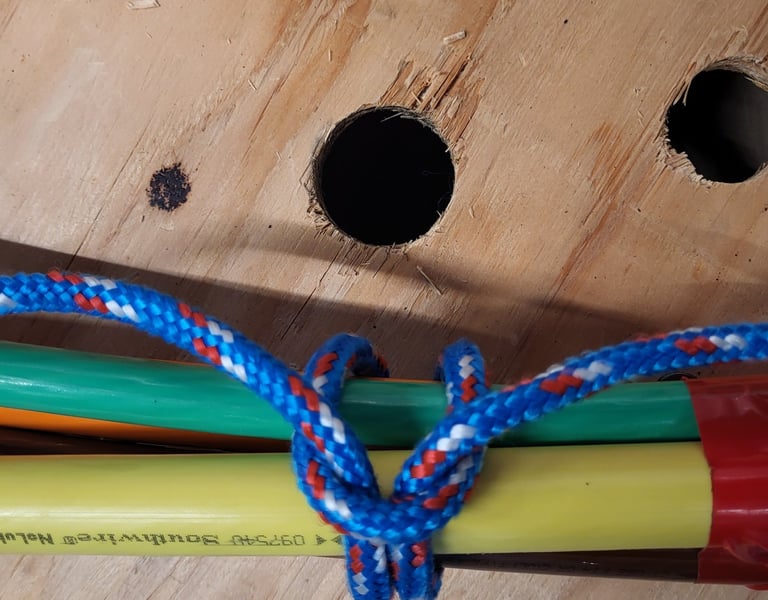
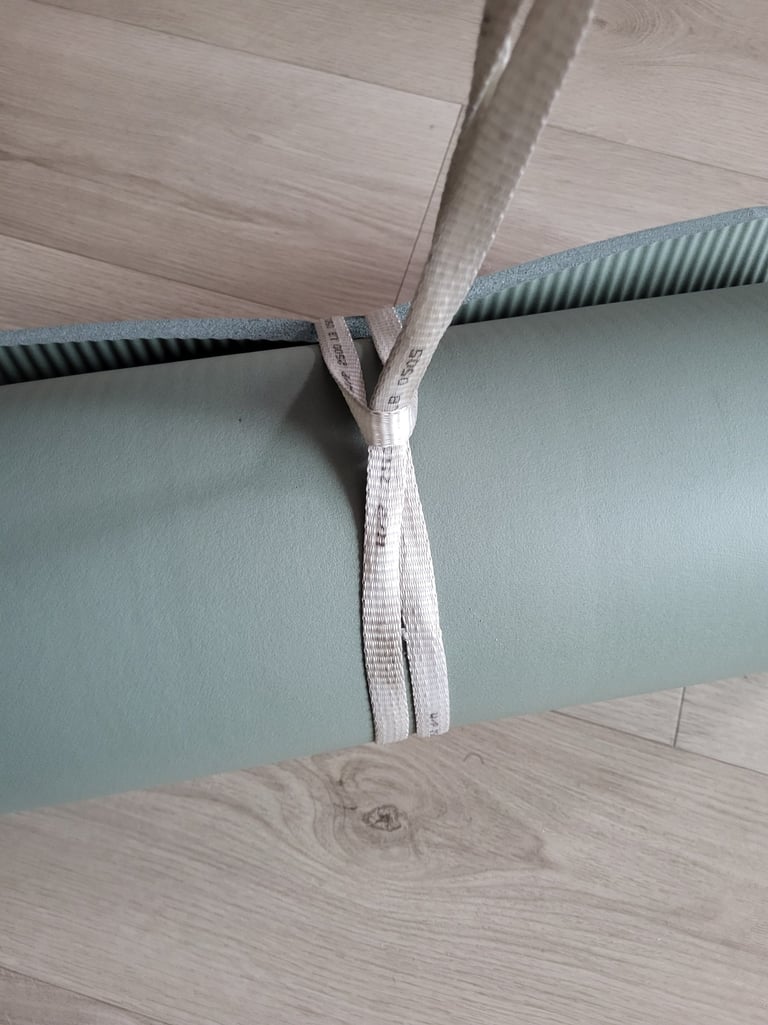
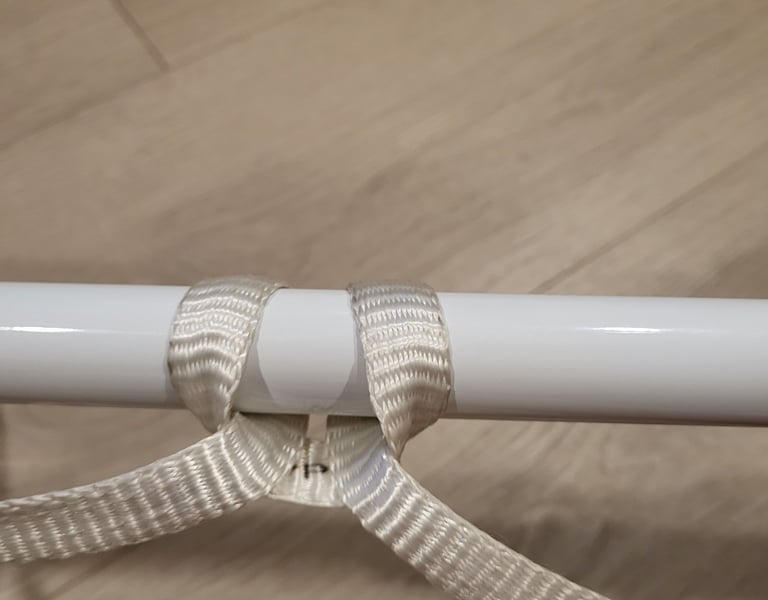
The Cow Hitch (Ashley Book of Knots #1802) is one of the most fundamental hitches in rigging, consisting of two half hitches tied so that both working ends exit the knot from the same side of the crossover. When tied using a continuous loop of rope or mule tape rather than a single line, it is commonly referred to as a Girth Hitch. While it does not offer the intense friction grip required for long, high-tension conductor pulls through conduit, its extreme speed, simplicity, and ease of untying make it an indispensable knot for everyday material handling and job-site staging.


History of the Cow Hitch
The Cow Hitch is an ancient utility knot named for its historic agricultural use in tethering livestock to posts, allowing animals to graze without easily jamming the line. It gained widespread maritime and trade adoption under the name Lark's Head, where sailors used it to secure light rigging lines, rings, and equipment. Clifford Ashley formally cataloged it as Entry #1802 (among many) in The Ashley Book of Knots (1944), noting its primary role as a light-duty attachment hitch.
Uses for Electricians & Construction
Seating Underground PVC Conduit: Tie a 4-to-6-foot loop of mule tape onto a large diameter conduit (such as 6" PVC) using a Girth Hitch. This creates a quick, balanced pull point to guide and force hard-to-grip pipe bell-ends and couplings together tightly while gluing.
Tool Lanyards & Equipment Staging: Rapidly secure tool lanyards, stage gear, or hoist light equipment to elevated decks without needing complex rigging.
Strap Wrench: A Cow Hitch in a short loop and with a straight lever can easily be used as a make-shift strap wrench for removing or tightening filters, conduit, or fittings.
Component for Advanced Hitches: Serves as the core sliding mechanism inside a Running Bowline and forms the foundation for multi-wrap friction hitches like the Prusik Hitch.
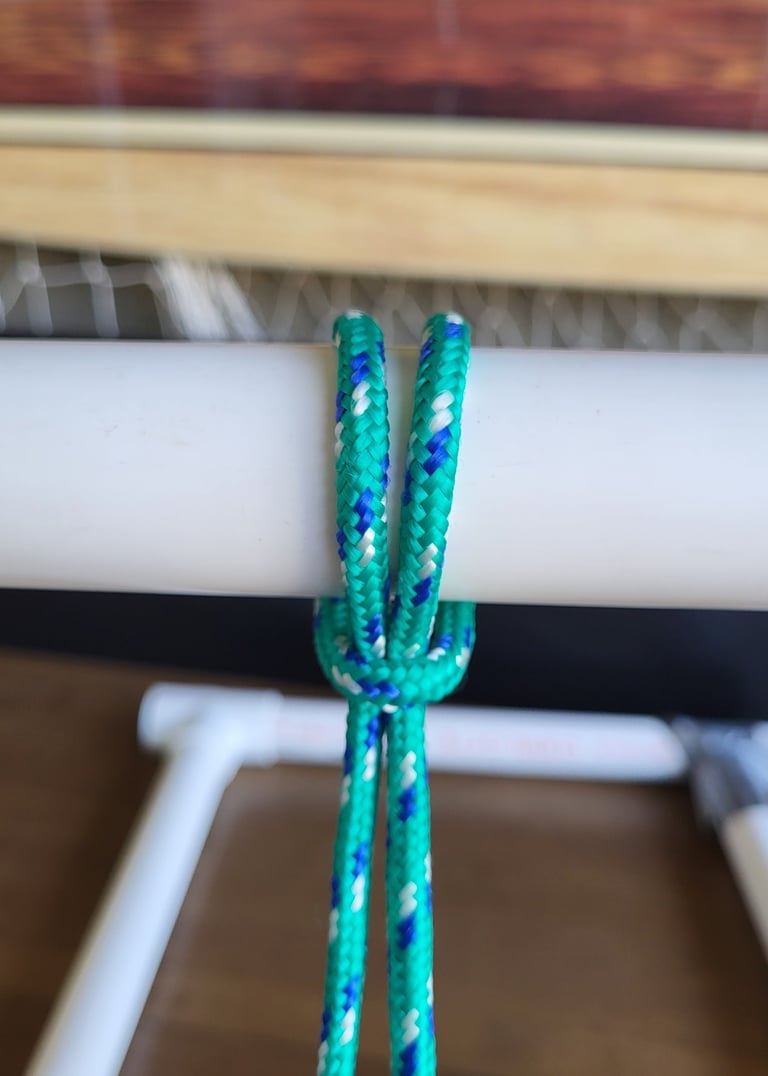

The Cow Hitch is a essential tool for any electrician or trade worker needing a fast, non-jamming attachment for daily tasks. While it should not be relied on for heavy conductor pulls without adding extra wraps, mastering its basic form gives you a quick option for pipe seating, lanyard attachment, and job-site material control.
To explore more specialized variations that build on the Cow Hitch, check out these related guides:
Learn how to cinch down unruly cable bundles with the Woodlands Zip-Tie.
Secure and suspend temporary power cables and hoses safely using the Prusik Hitch.
Build a reliable running loop for hoisting, anchoring, and tethering with the Running Bowline. While it lacks the extreme grip required for heavy rigging and wire pulls, its sheer simplicity and speed make it an indispensable asset for daily material handling. Master this basic connection to streamline your workflow on the job site.
How to Tie a Cow Hitch:
There lots of ways to tie this simple hitch but here are three methods I frequently utilize.
1: Around an Object (Single Line):
Pass the working end around the pipe, post, or anchor point and make a single half hitch.
Make a second half hitch directly adjacent to the first, reversing the direction.
Dress and set the hitch so both ends exit the crossover together on the same side.
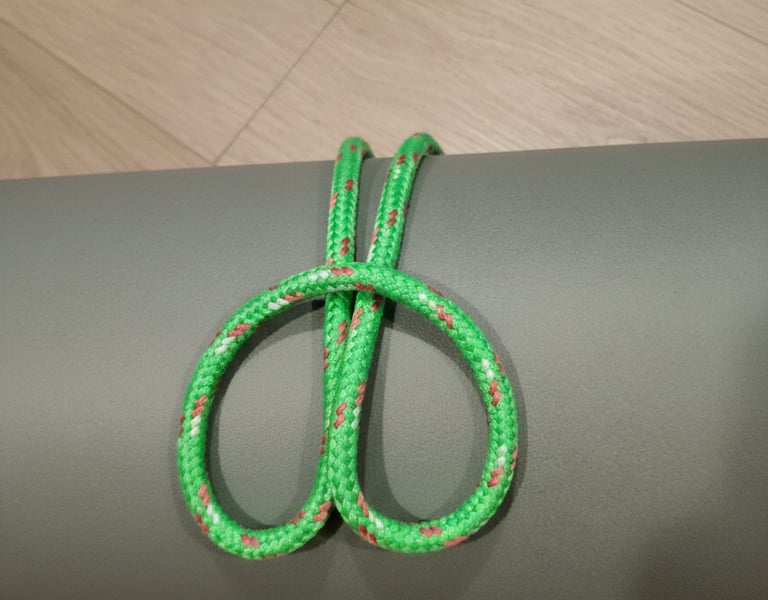
2: Folded Bight Method (Fast Loop / Over a Post):
Pinch the line with both hands side-by-side.
Twist your hands in opposite directions to create two reverse loops.
Dress and set the hitch so both ends exit the crossover together on the same side.
Fold the two loops together and drop them over the end of the object.
3: Loop-Through-Itself Method (Girth Hitch / Around Closed Rails or Pipe):
Pass a closed loop or bight of line behind the railing, pipe, or structure.
Grab the standing ends (or the rest of the strap/line) and feed them directly through the exposed loop.
Pull the standing ends tight to cinch the hitch securely against the object.

Safety Disclaimer: ⚠️ Material Handling Only
The knots and techniques demonstrated on this site are intended strictly for material handling, wire pulling, and equipment securement. > Never use these hitches and knots for life safety, fall protection, or overhead lifting of loads where a failure could result in injury or death. Always use OSHA-compliant, load-rated hardware (harnesses, shackles, and slings) for critical lifts. Your safety team is there for a reason—consult them for high-risk tasks. Master the craft, stay out of pinch points, respect the load, and live to tie knots another day.
Questions or tips? Reach out anytime. I would love to hear about new knots and techniques.
Check out my YouTube channel for knot tying, rigging tips, and other electrician related tutorials.
© 2025. All rights reserved.
I made this website by myself with Hostinger Website Builder. Try it and start building your idea, today.