Schwäbisch Hitch (Wireman's Pulling Hitch)
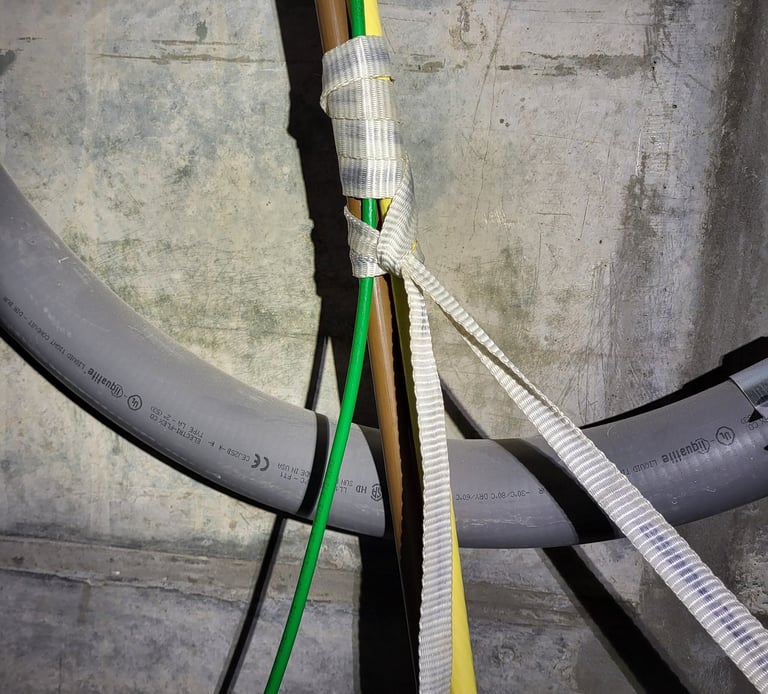
The Schwäbisch Hitch is the industrial gold standard for a reason: it’s fast, compact, and—unlike a standard half-hitch—it actually bites without using tape. Whether you're dealing with slick THHN or heavy-duty XHHW, this hitch stays put under tension and slides easily when you need to reset.
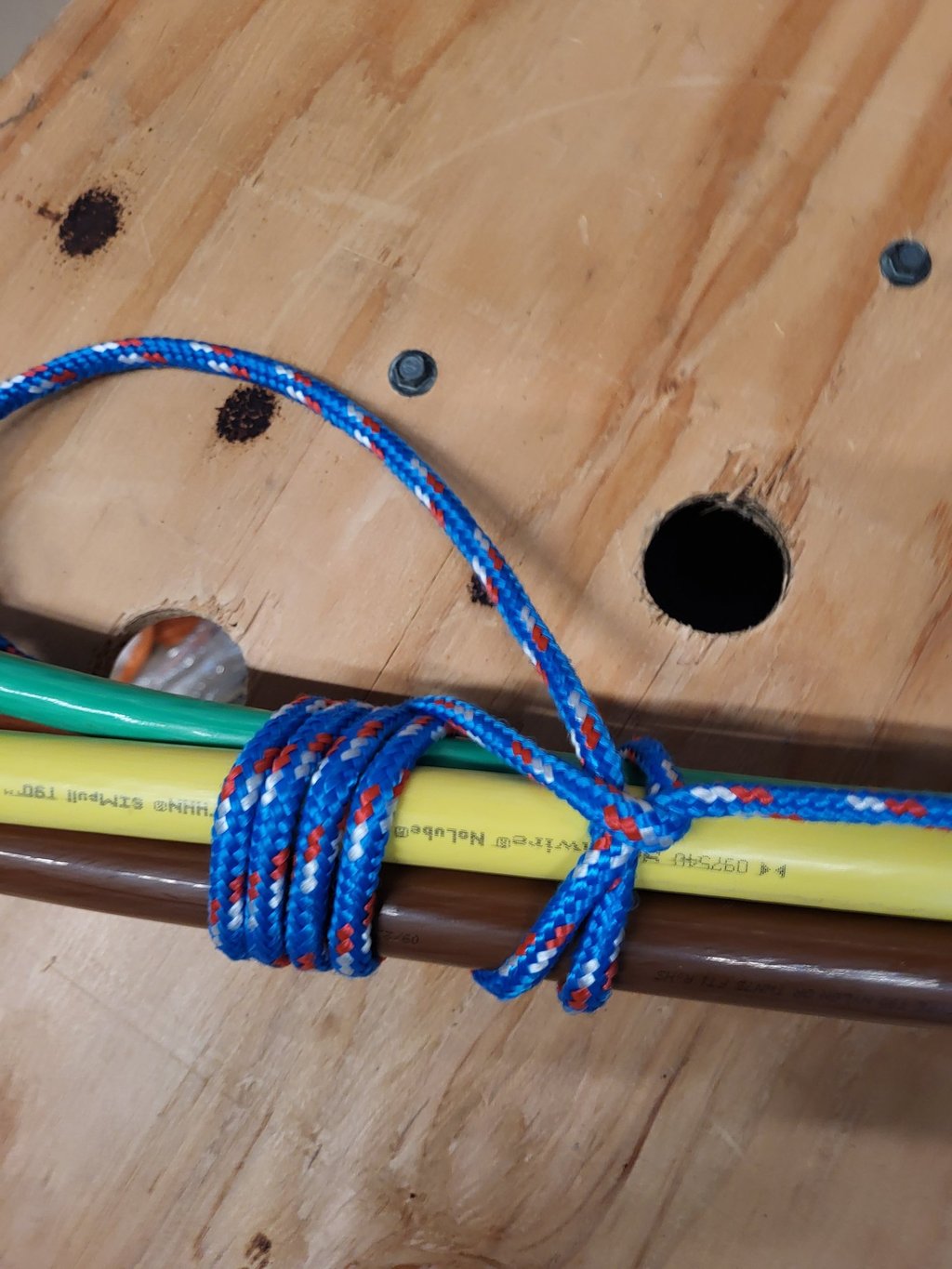
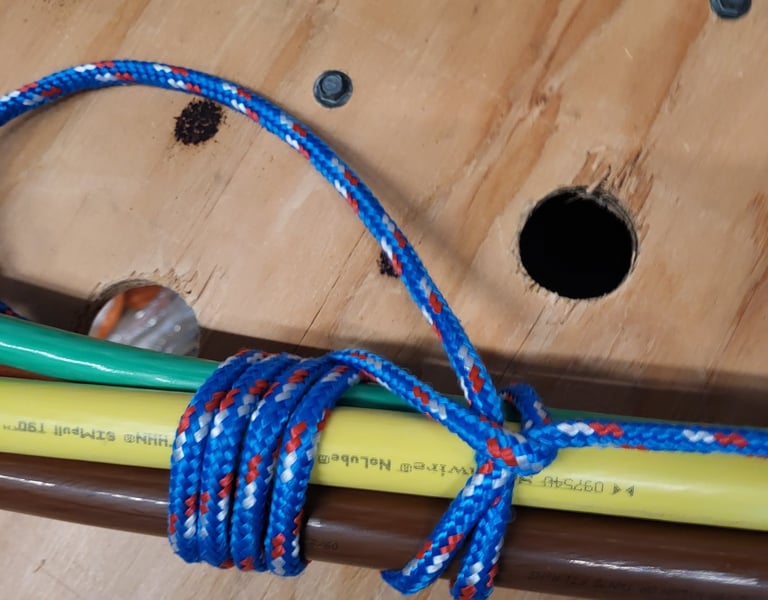
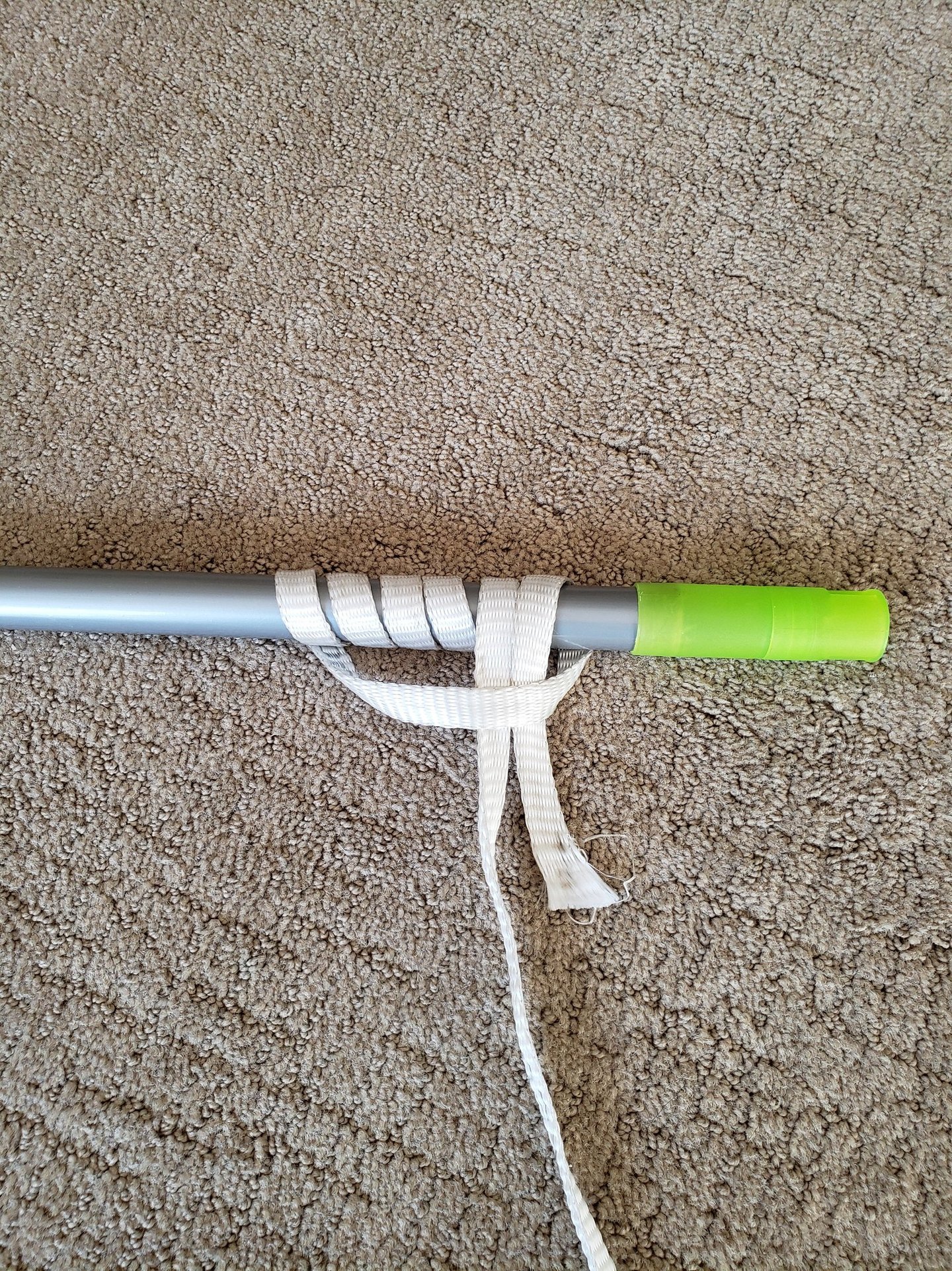
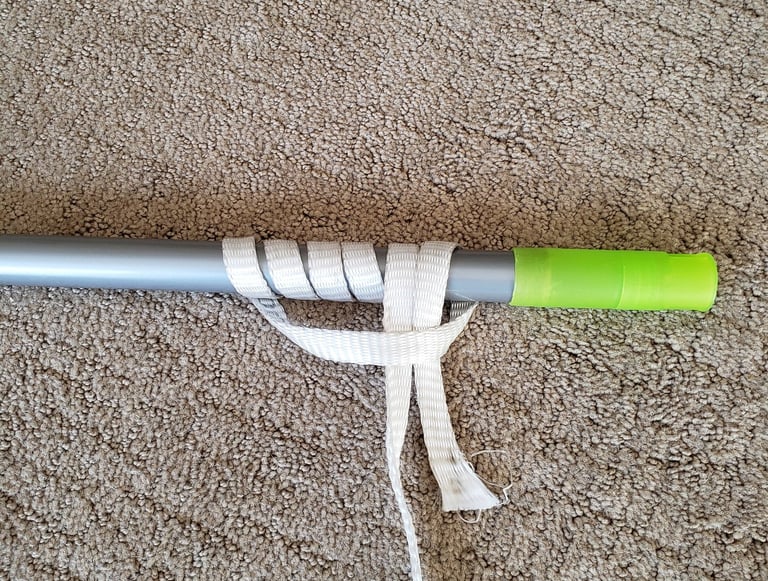
Why the Schwäbisch Hitch is the Ultimate Wireman’s Tool
Superior Grip: It is specifically designed to bite into slick THHN or XHHW insulation. Even when the wire is covered in pulling lube or soap, the asymmetric wraps prevent dangerous slippage.
Self-Tending: This hitch grips tight under tension but slides effortlessly when slack. This is a game-changer for overhead hand-pulls where you need to reset your grip frequently.
Mule Tape Compatible: Unlike a standard Clove Hitch, it won’t bunch or fold flat pull-tapes, maintaining a secure grab on the narrow surface.
Zero Jamming: Even after a high-torque mechanical pull, the Schwäbisch remains easy to untie. You'll never have to cut your pull-rope or mule tape again.
Low Profile: The slim design passes through small conduit (even 2-inch or smaller) much more smoothly than bulkier knots, significantly reducing the risk of a mid-pull snag.
The Backstory: Why "Schwäbisch"?
The name Schwäbisch (pronounced SHWAY-bish) traces back to the Swabia region of Germany. While it’s officially the Schwäbisch Hitch, it’s often searched for by its phonetic spellings like the Schwabish, Swabish, or even Swaybish hitch. In the field, most guys just call it the Wireman’s Friction Hitch, Pulling Hitch or the Asymmetric Prusik.
Originally a "secret weapon" in professional arboriculture, the hitch was designed for climbers who needed a knot that would bite like a vice under load but remain "preset" on the rope without sliding down when slack. Electricians eventually adopted it for the exact same reason: when you're navigating a complex pull through a 200-foot run of conduit, you need a hitch that stays exactly where you put it until the tugger starts spinning.
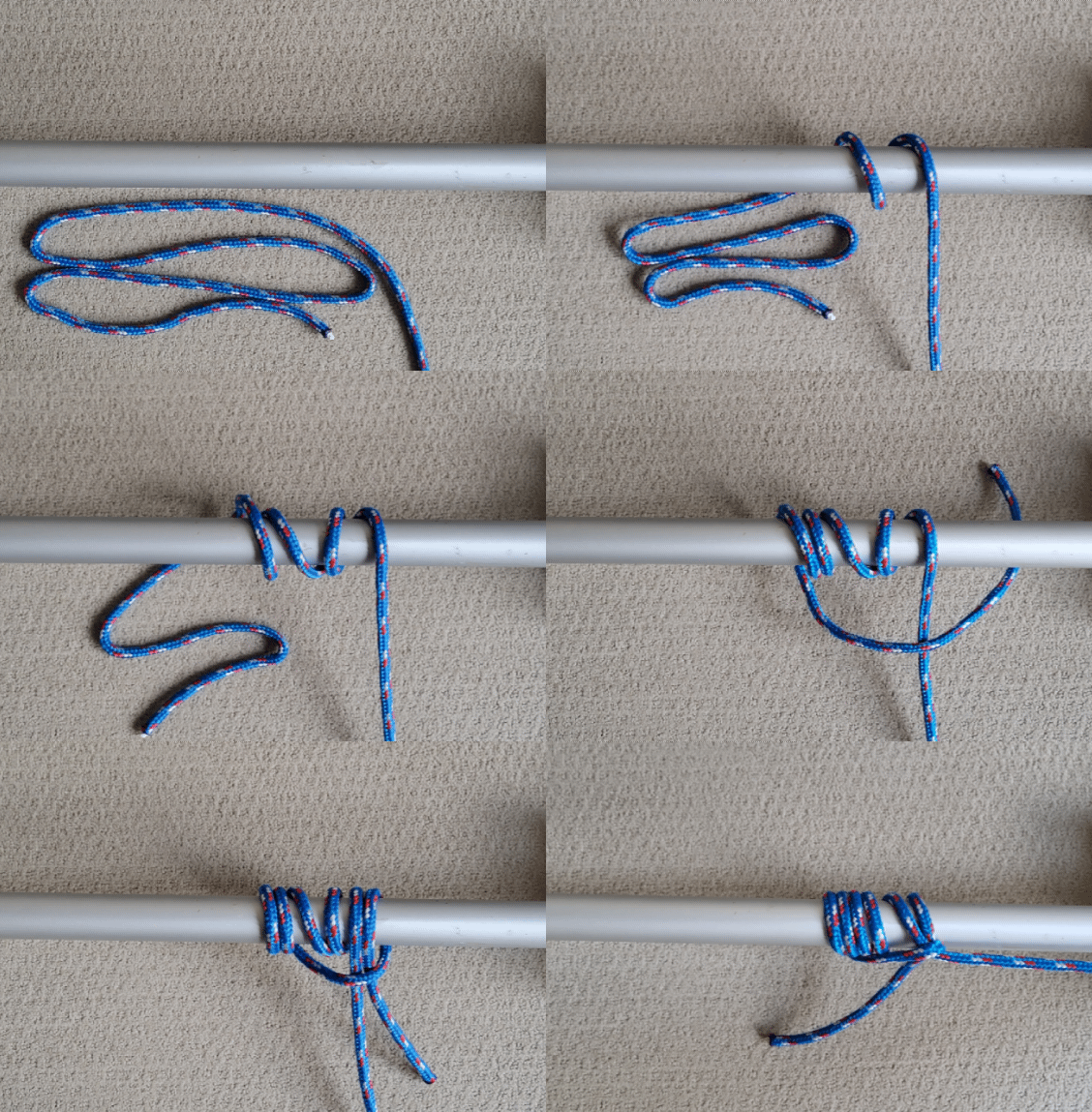
How to Tie:
Wrap: Make 4–5 full wraps around the conductor, working toward the direction of the pull.
Cross: Bring your tag end back over the top of your wraps and the working end.
Finish: Dive the tag end under the wire and back around to finish with a crisp Half Hitch.
Dress: Pull it tight. The wraps will naturally separate under load as the rope stretches—this is normal.
The true value of the Schwäbisch Hitch shows up at the end of the run. When your wire head reaches the tugger but you still need another 15 feet to reach the termination bus bar through the gear, this hitch is your best friend. You can tie it directly onto the lubed conductors using your existing rope or Mule Tape, and it will grab instantly without slipping. If you need to take multiple 'bites' to get the length you need, just slack the line, slide the hitch up, and pull again.
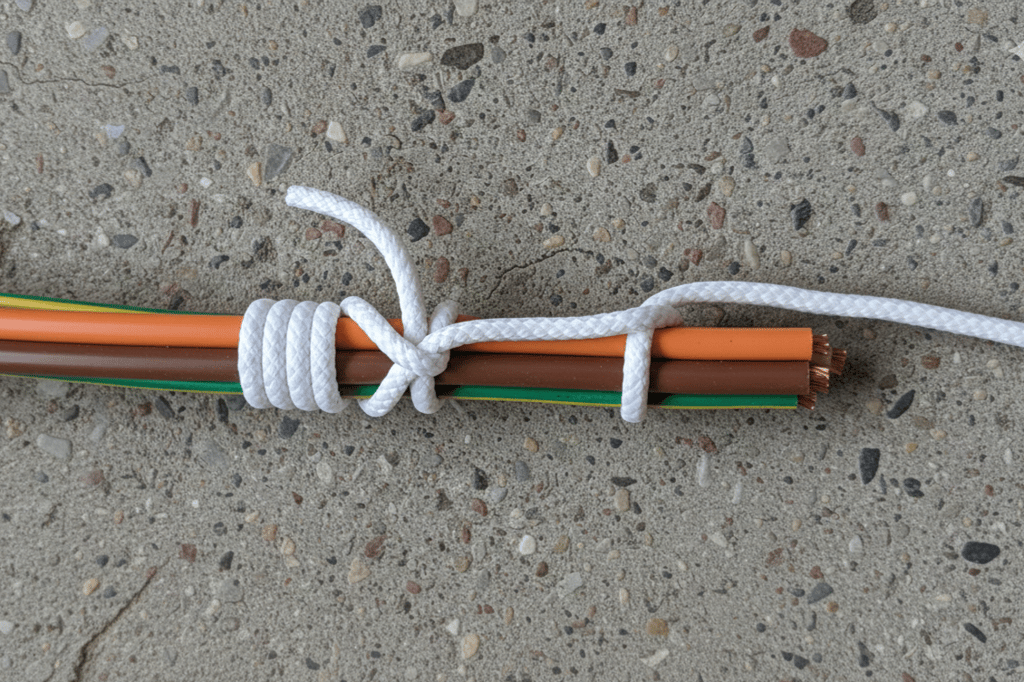
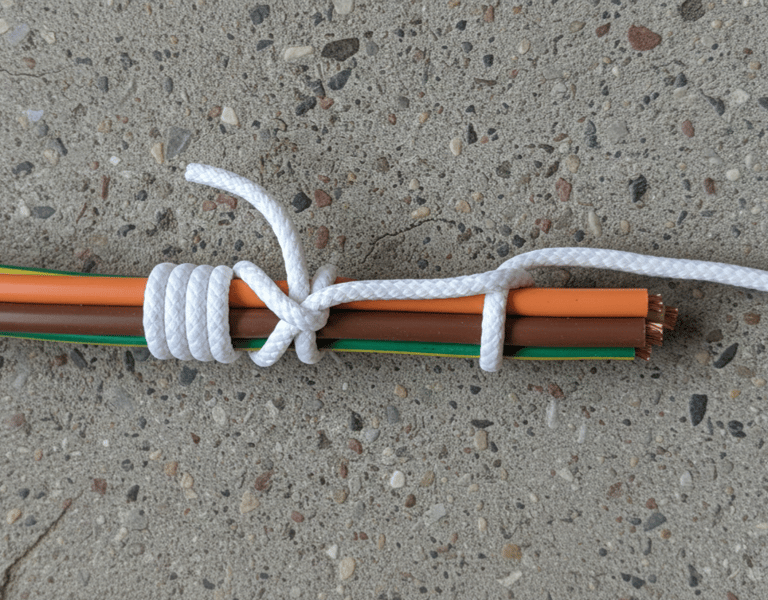
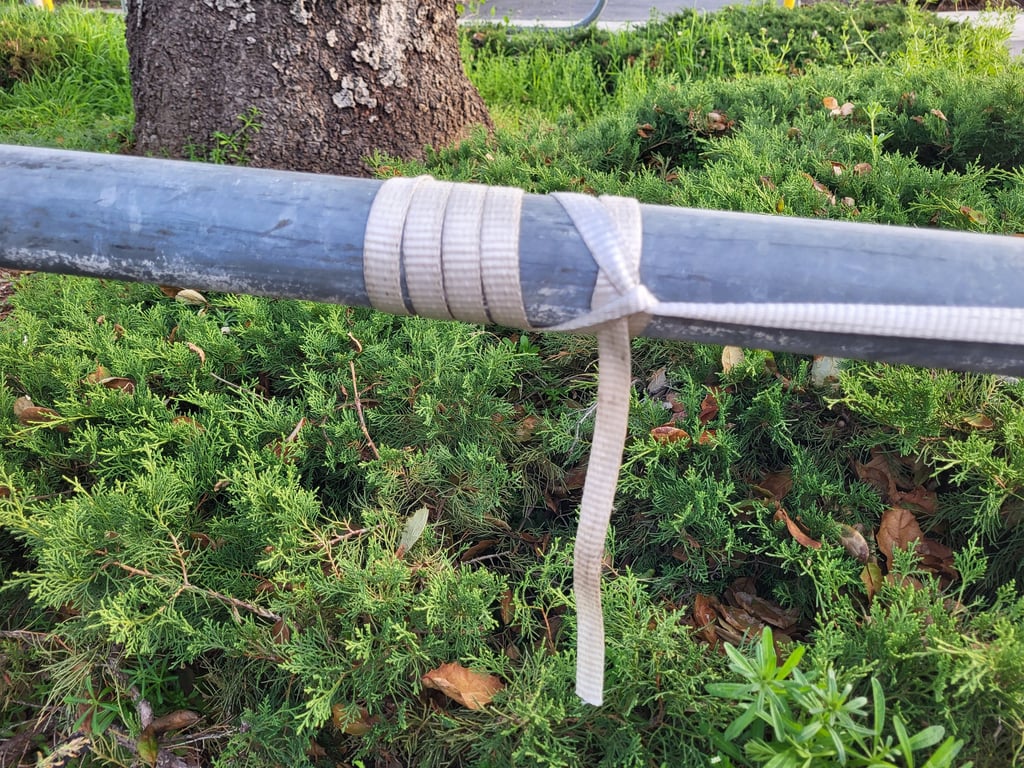
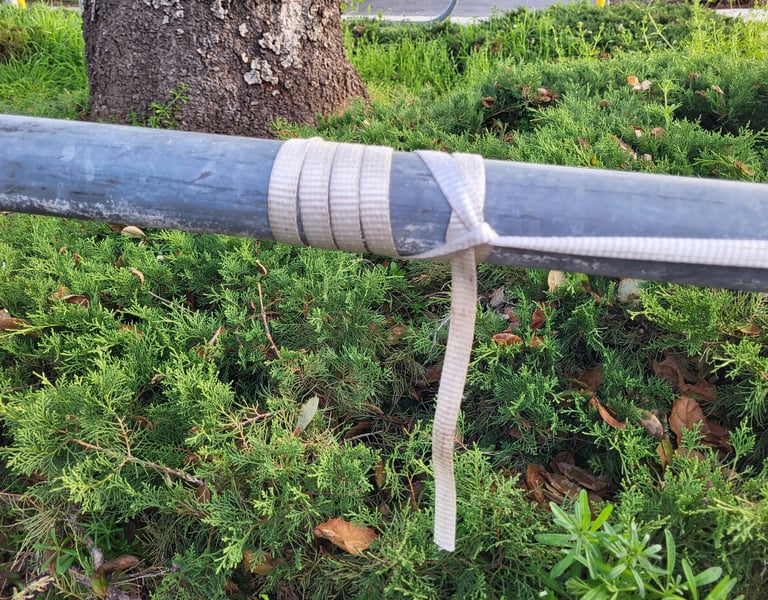
When tied correctly, the standing rope and tag end will exit the hitch right next to each other. It looks like a Cow Hitch with backing wraps. Unlike a traditional Half Hitch pulling head, no tape is needed to secure the tag end, as this knot will grab without assistance.
Pro-Tip: When pulling heavy cable or conductors, always leave a 12-inch 'tail' on your Schwäbisch pulling hitch. This gives you extra security if the rope stretches during a high-tension pull.
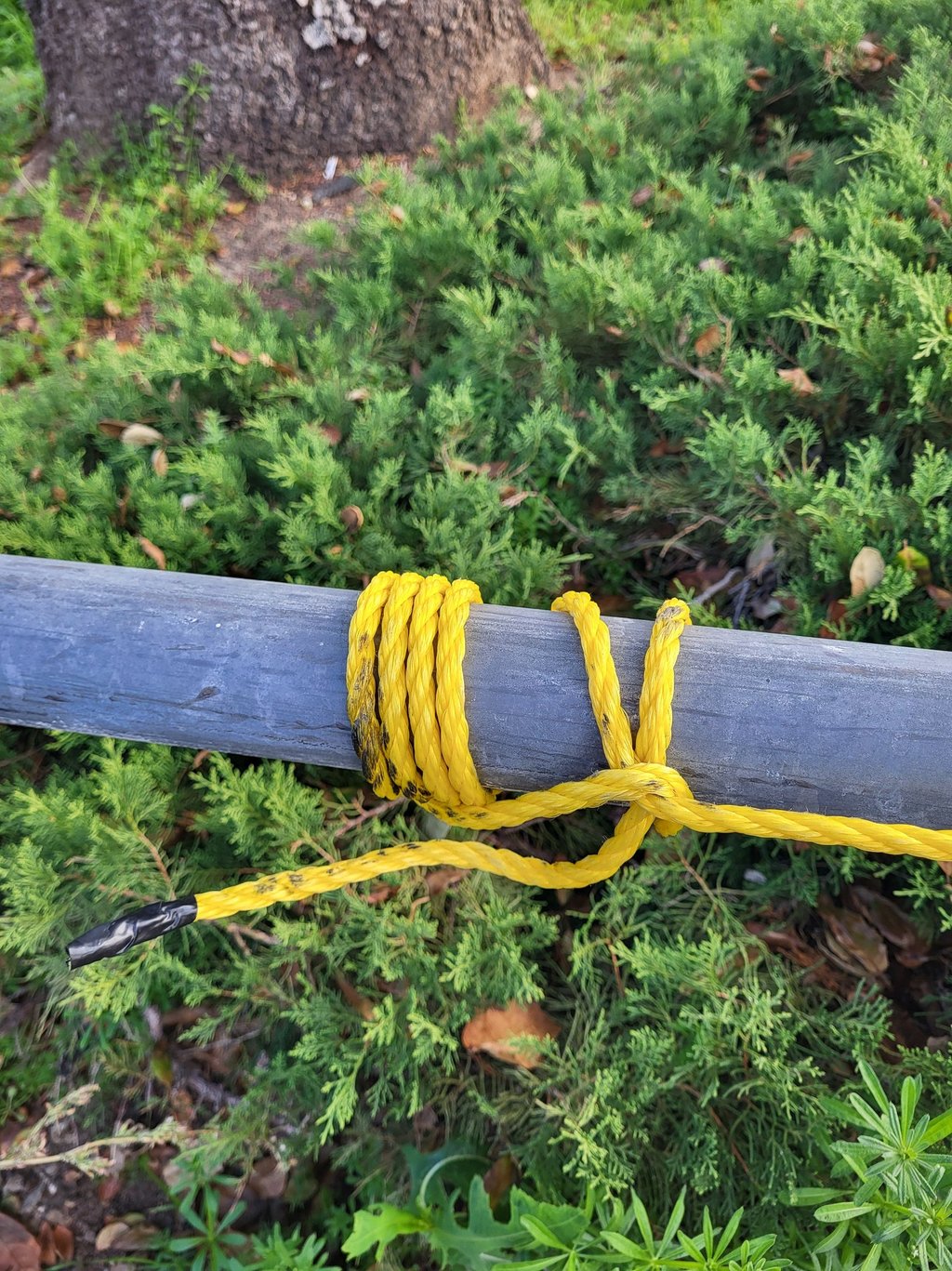
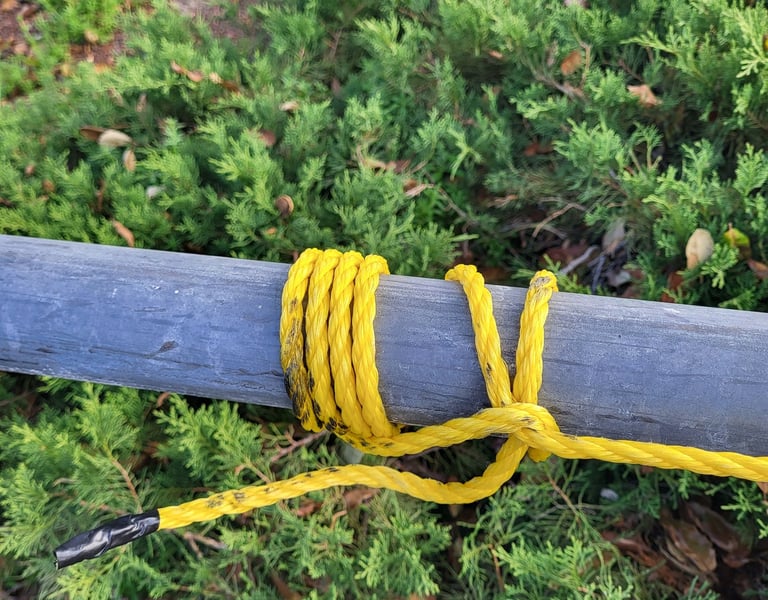
Additional use cases of this hitch include:
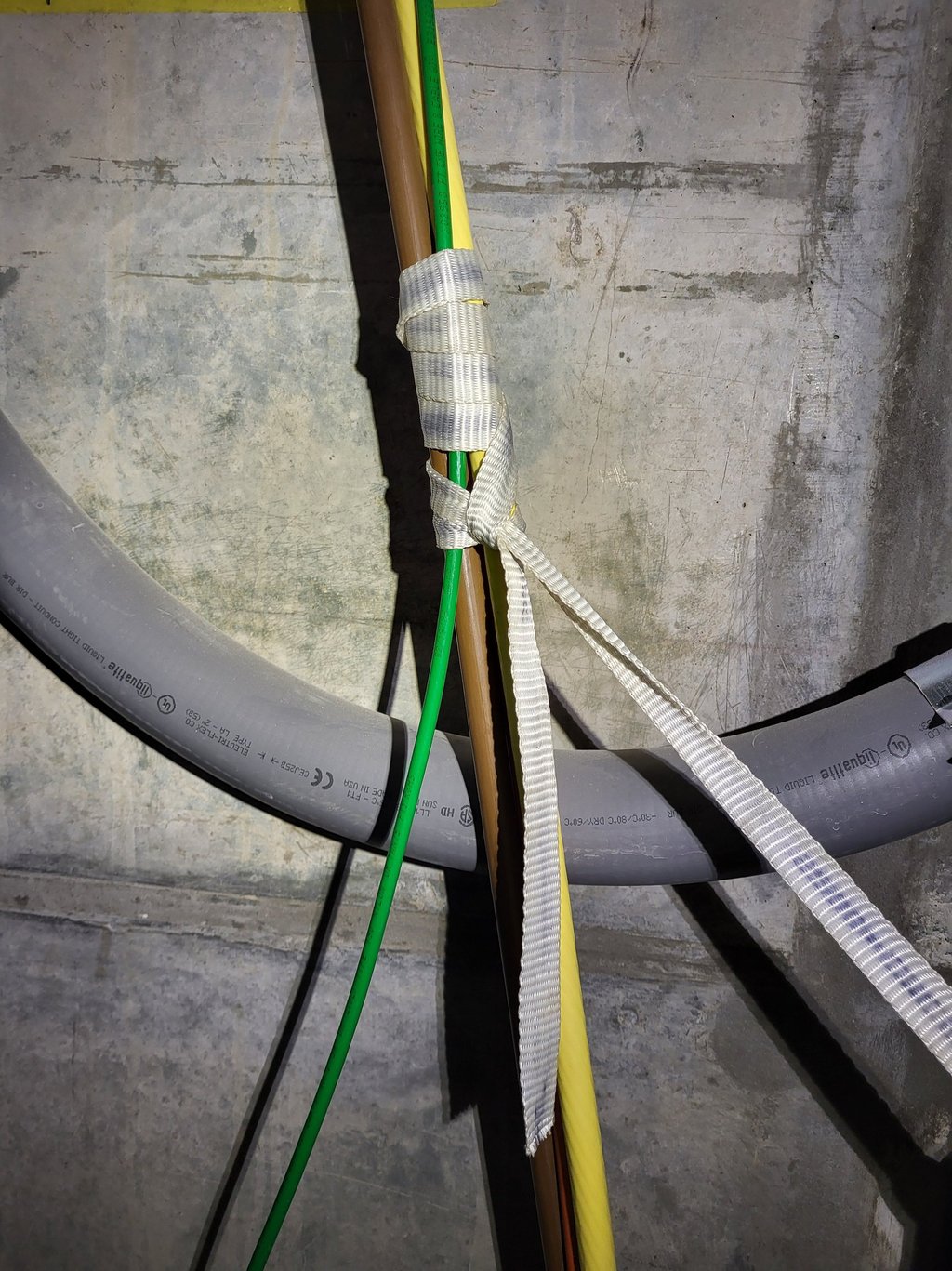
Strain relief for hanging wires.
Removing ground rods or stakes.
Anchoring to a conduit or pipe running parallel to your direction of force.
As a "keeper" for wire pulling socks in place of the more damaging tie-wire technique.
If you enjoy the mechanics of the Schwäbisch, you should also check out its heavy-duty cousin: the Icicle Hitch. While the Schwäbisch is the undisputed king of wire pulling and mule tape, the Icicle Hitch is specifically engineered for high-performance gripping on rigid, smooth surfaces like stainless steel pipes or fiberglass rods. Adding both to your repertoire ensures you have the right friction hitch for any material that lands on the job site.

Safety Disclaimer: ⚠️ Material Handling Only
The knots and techniques demonstrated on this site are intended strictly for material handling, wire pulling, and equipment securement. > Never use these hitches and knots for life safety, fall protection, or overhead lifting of loads where a failure could result in injury or death. Always use OSHA-compliant, load-rated hardware (harnesses, shackles, and slings) for critical lifts. Your safety team is there for a reason—consult them for high-risk tasks. Master the craft, stay out of pinch points, respect the load, and live to tie knots another day.
Questions or tips? Reach out anytime. I would love to hear about new knots and techniques.
Check out my YouTube channel for knot tying, rigging tips, and other electrician related tutorials.
© 2025. All rights reserved.
I made this website by myself with Hostinger Website Builder. Try it and start building your idea, today.