The Overhand Knot: A Basic Building Block and a Constant Nuisance
The Overhand Knot is the simplest knot in existence and the foundation of countless other hitches and bends. While it is a natural first step in knot-tying, it is frequently overused in situations where it doesn't belong. It also often shows up, uninvited, as it easily forms when uncoiling a rope if you aren't careful. In the electrical trade, knowing when to use an overhand knot—and more importantly, when to avoid it—is a mark of a seasoned pro.
Why It's a Problem for Industrial Lines
While it's easy to tie, the Overhand Knot is a "line killer." If you see one in your rope, it is always worth your time to chase it down and untie it before it become a serious problem.
Strength Loss: Most knots reduce the breaking strength of a rope, but the overhand is particularly brutal. While a Bowline might retain 75–80% of a rope's strength, a simple overhand can drop that to 40–50%.
Jamming: Once an overhand knot is under a heavy load—like a long wire pull through conduit—it "jams" and becomes nearly impossible to untie by hand.
Point of Failure: In high-tension pulls, the sharp bend radius inside the knot creates a stress point where the rope fibers are most likely to snap.
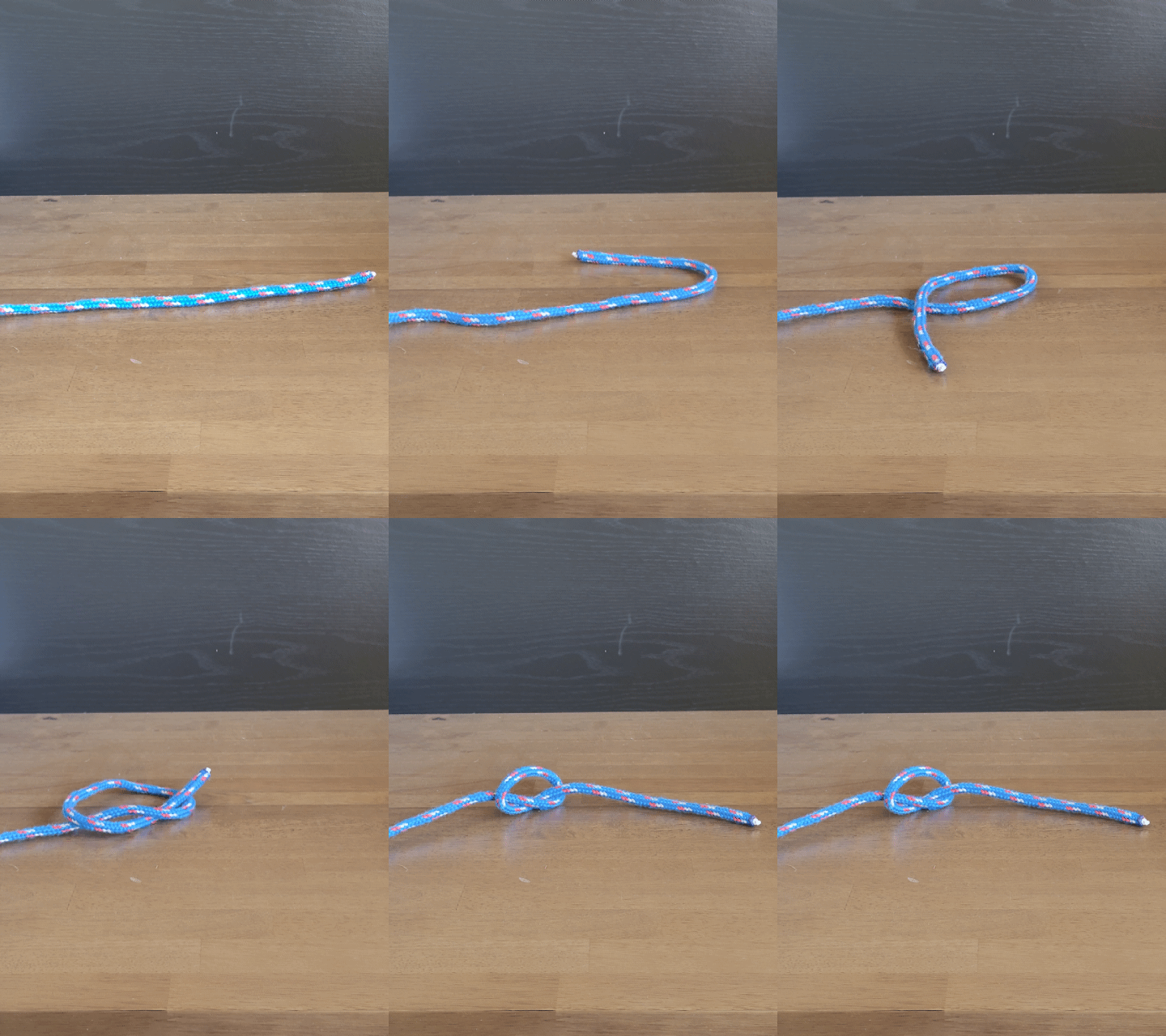
How to Tie the Overhand Knot
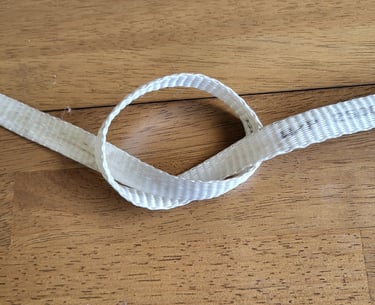
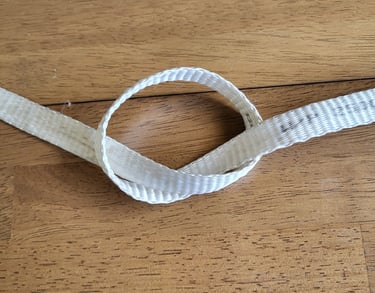
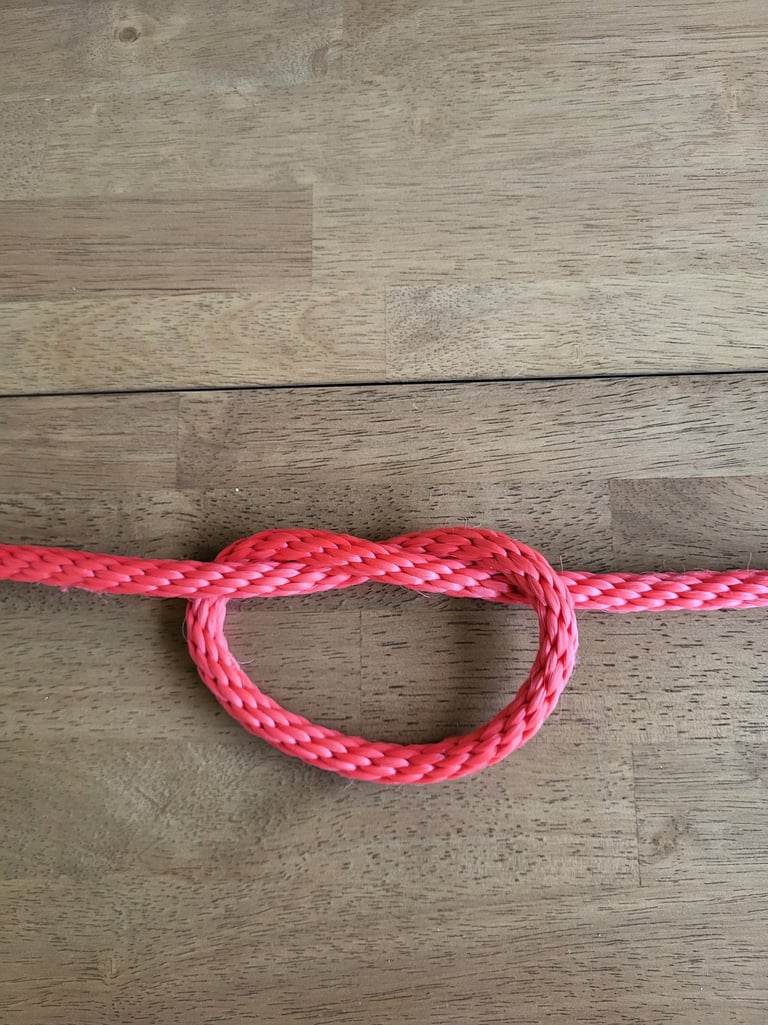
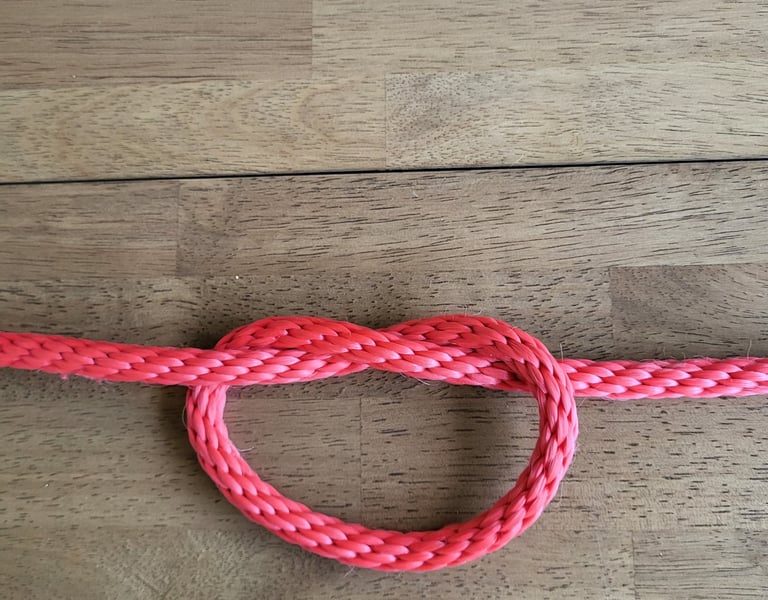
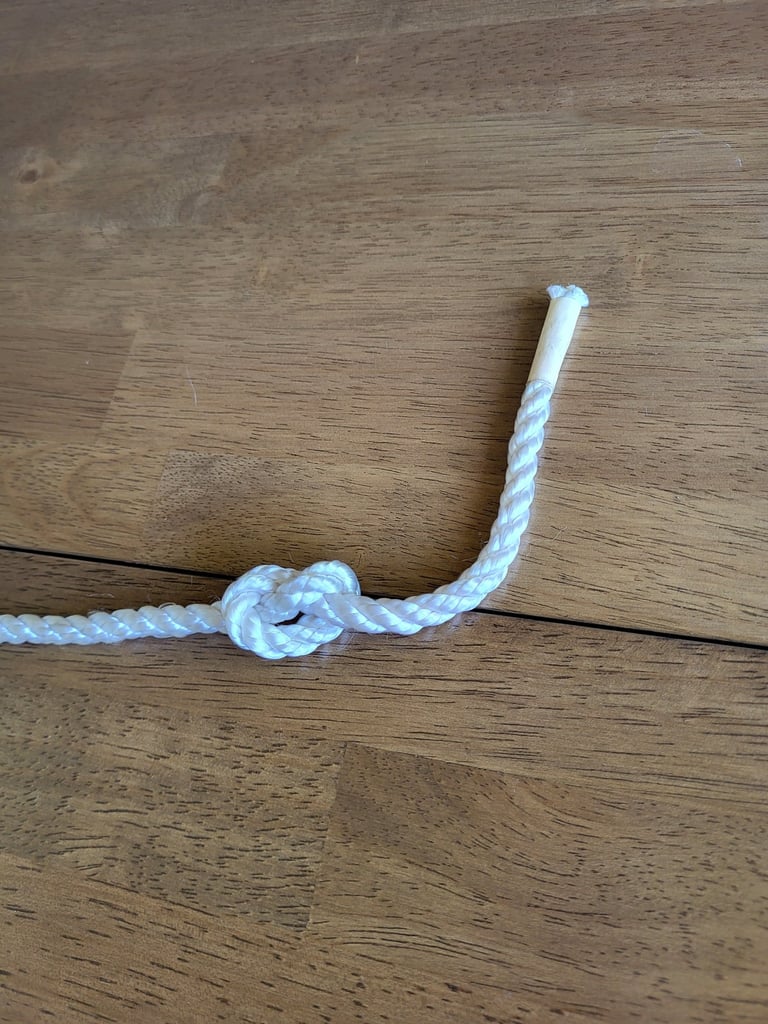
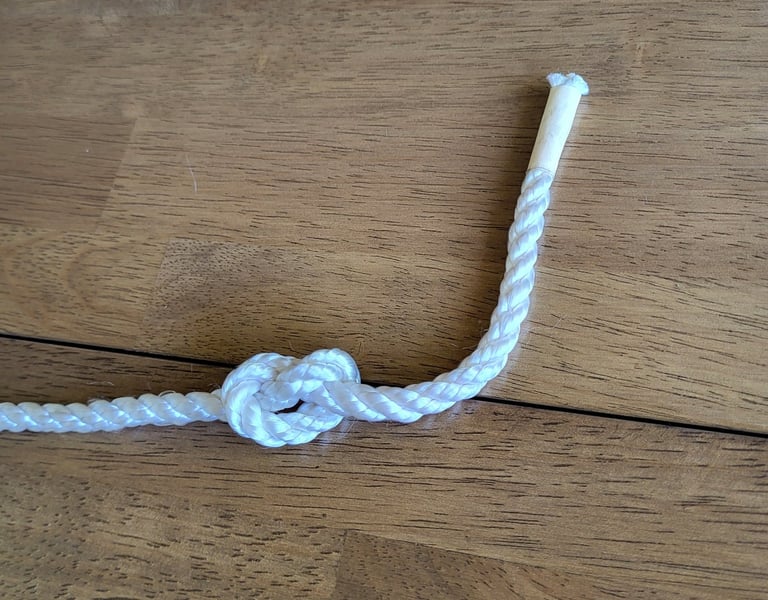
This is one of the most basic knot forms; you have probably tied it intuitively without even thinking.
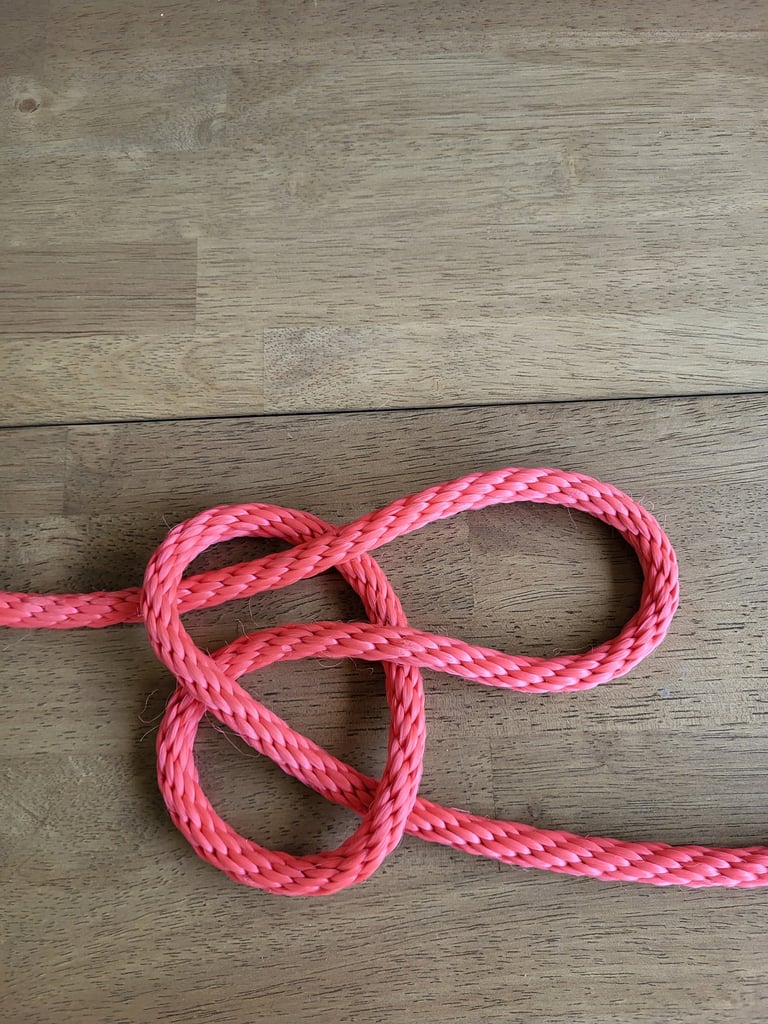
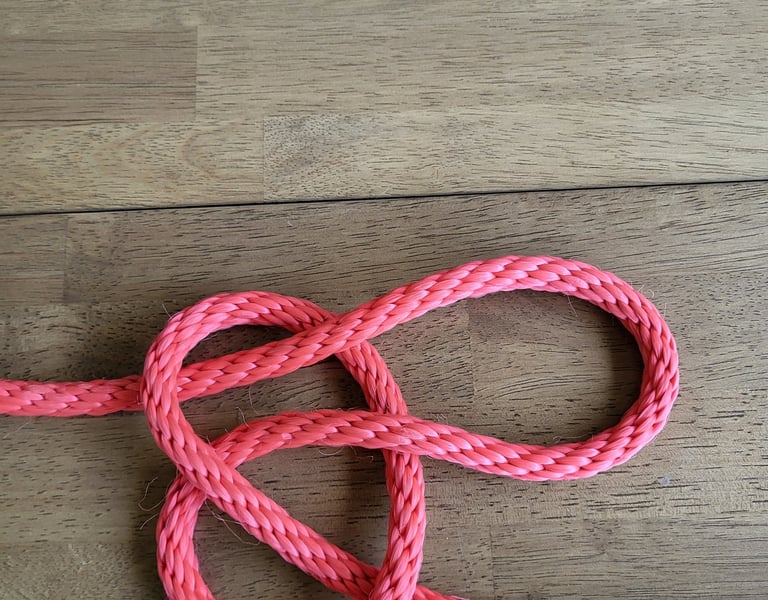
Form a Loop: Cross the tag end over the standing part to create a simple loop.
Pass the End: Tuck the tag end through the loop from the back to the front.
Set the Knot: Pull both ends to tighten the knot against itself.
Trade Practice: How to Use It Correctly
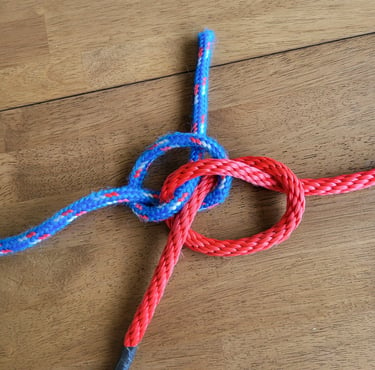
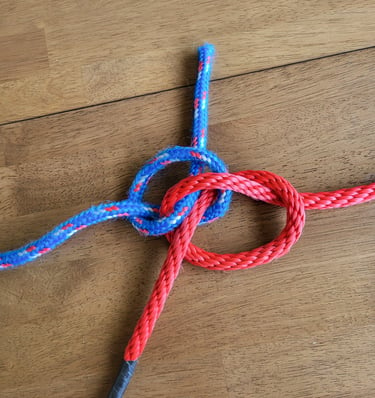
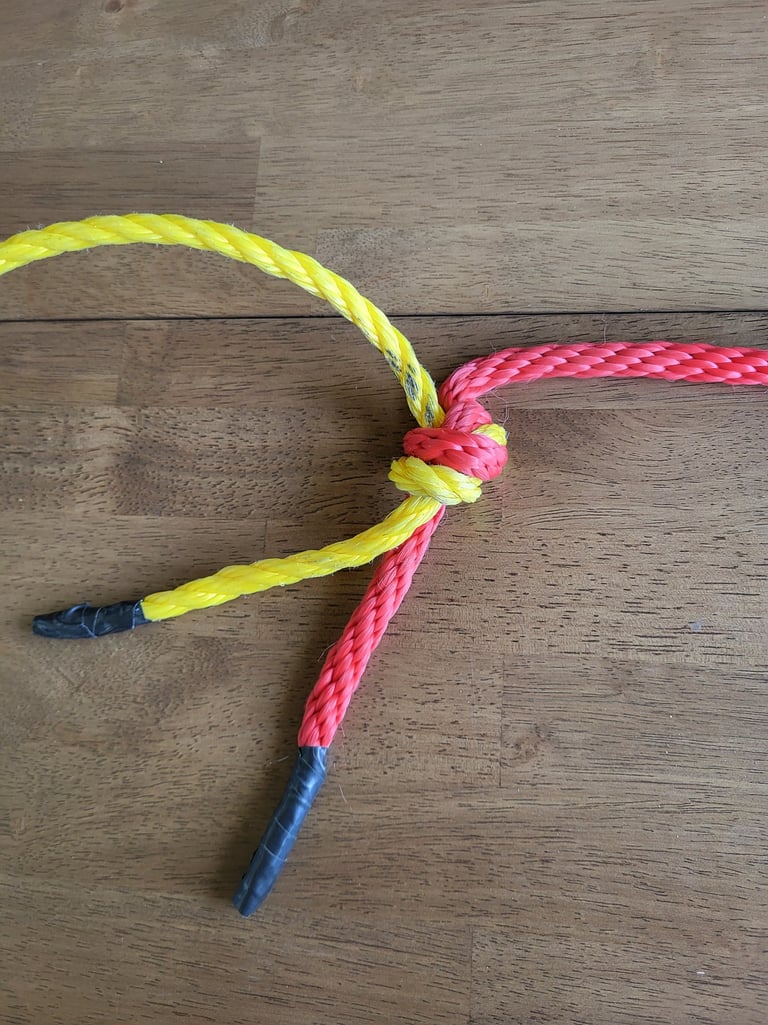
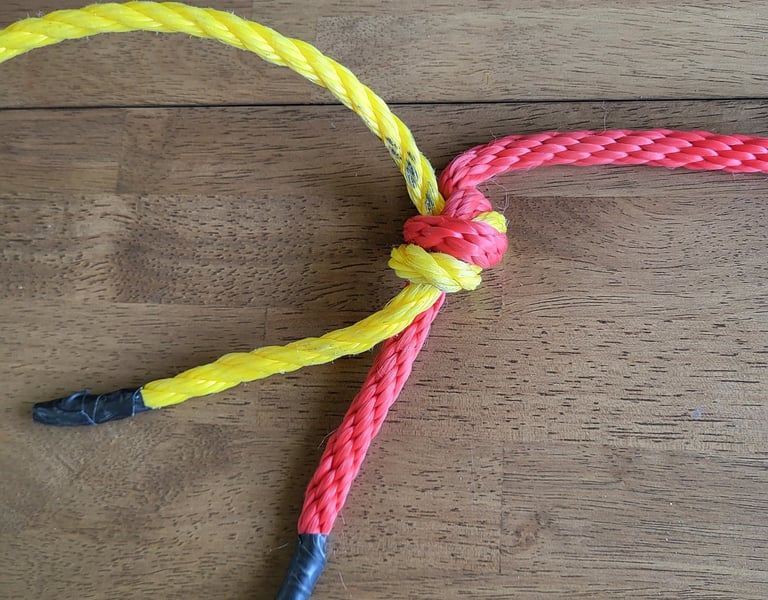
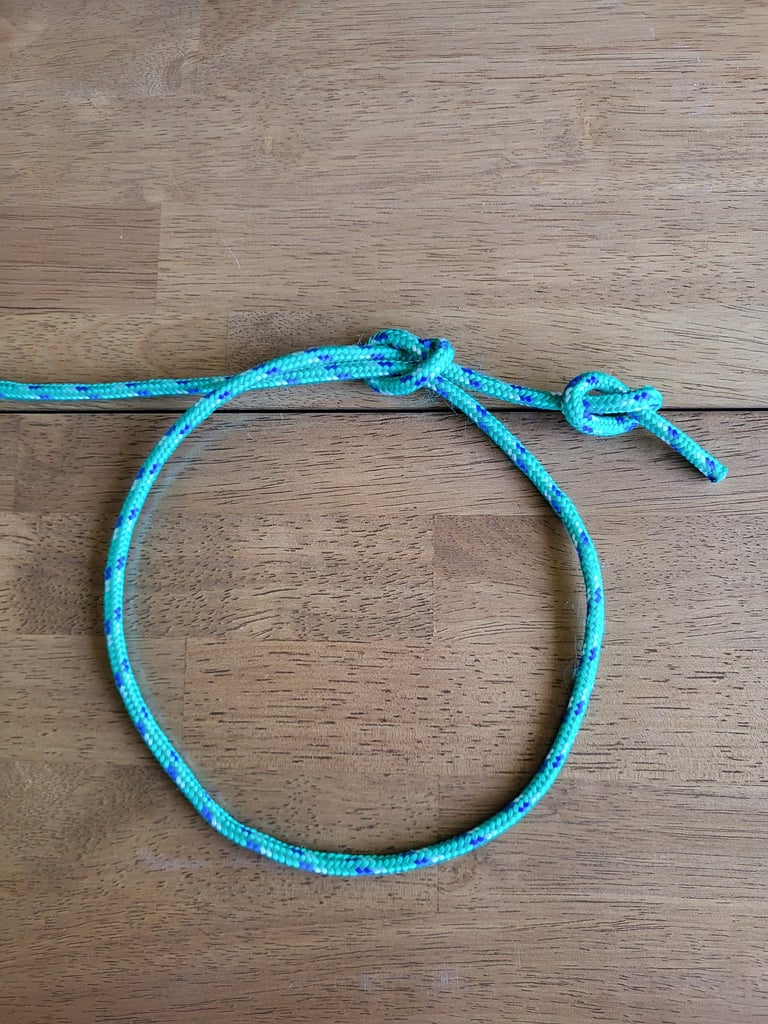
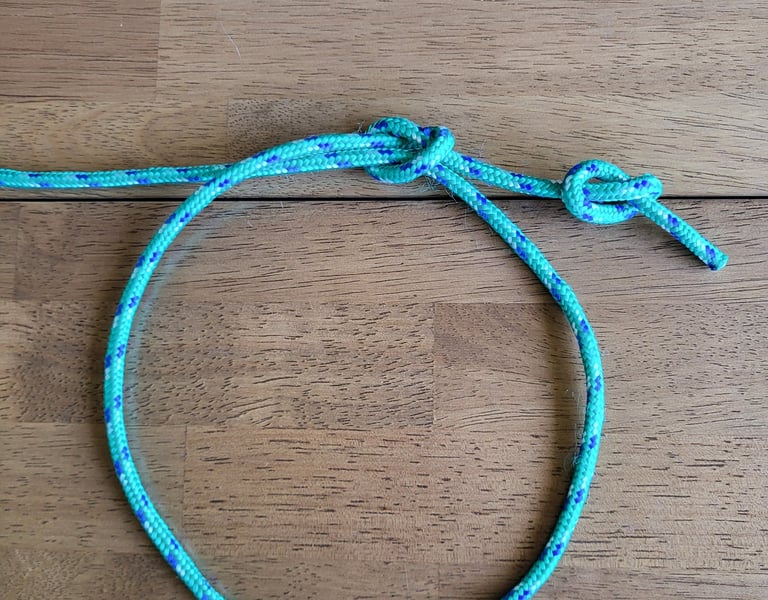
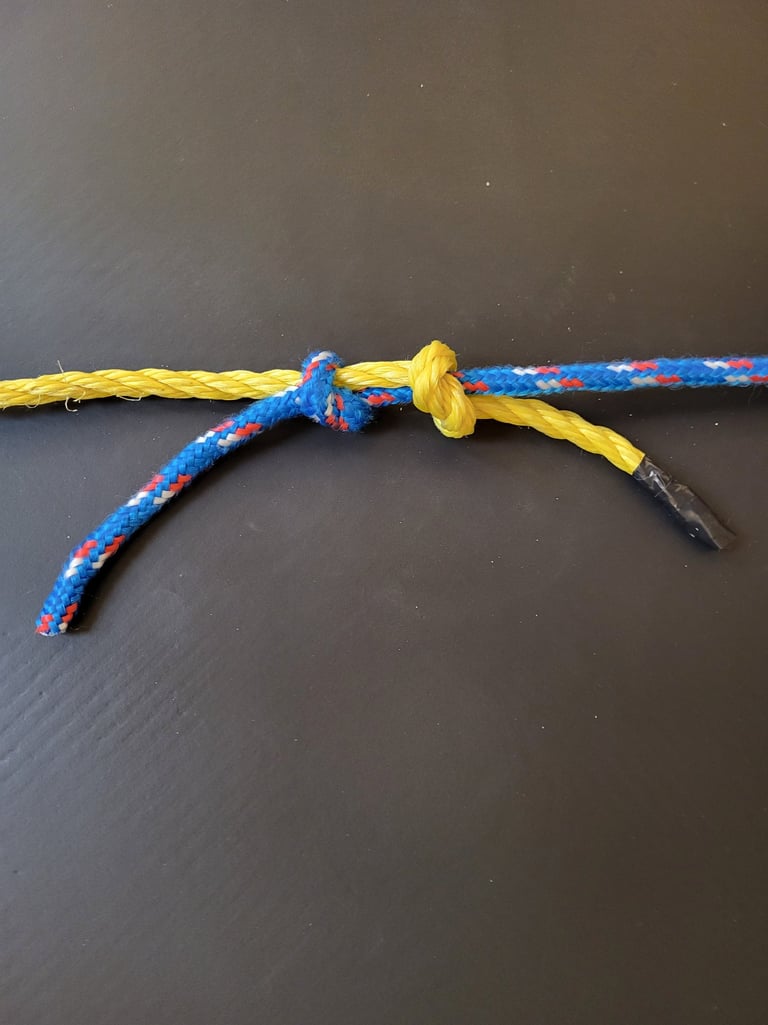
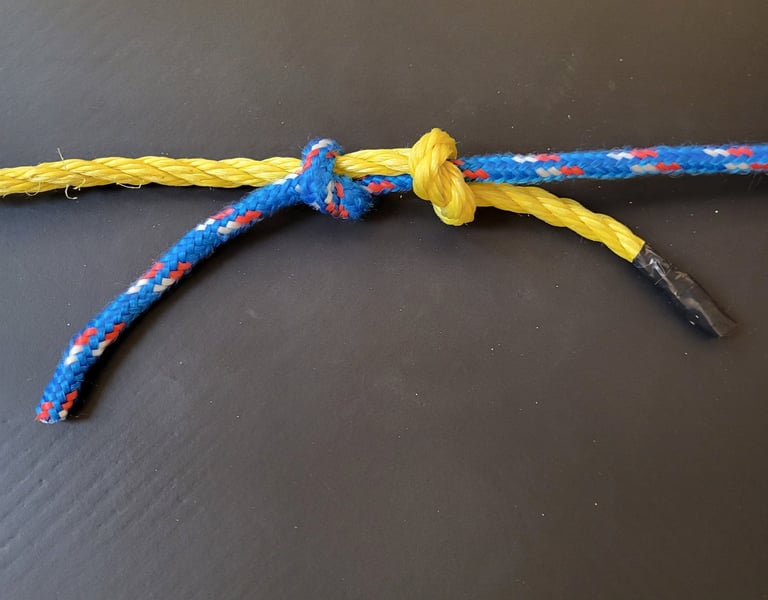
We have already outline some of the weaknesses of this common knot, but let's touch on one more. It is a terrible bend to join ropes! I often see people tying a Flat Overhand Bend with the end of two ropes to splice pieces together. It is a poor use of the knot though, since it slips easily and and almost certainly will be impossible to untie if it doesn't break apart. In climbing, they refer to this bend as the "European Death Knot", enough said. In the field, the only time you should purposely use a standalone overhand knot is as a Stopper Knot. If you need to prevent the end of a small cord from slipping through a hole or a pulley, a quick overhand does the job. For everything else—especially wire pulling or heavy rigging—look for a more "dressed" alternative.
How to Untie a Jammed Overhand
If you find an "asshole knot" in your pulling line, don't just pull harder.
The Twist: For stranded rope, try twisting the strands tight and pushing the rope back into the knot to create slack.
The Tool Method: Use a smooth screwdriver, a spud wrench, or a marlinspike to prying the loops apart.
Hammer Time: Rotating the Overhand knot while gently tapping it with a hammer against a hard surface can sometimes loosen the strands.
The Nuclear Option: If it’s jammed tight and you’re prepping for a heavy pull, cut it out. It is safer to cut the line and splice it back together with a Zeppelin Bend than to risk the line snapping at the overhand.
The Building Block: Knots That Use the Overhand
Despite its flaws as a standalone knot, the overhand structure is essential for creating more secure, specialized knots. Here are a few of the noteworthy knots and hitches
For Binding: The Square Knot and Granny Knot are essentially two overhand knots tied together.
For Bends: The stellar Zeppelin Bend, the Flat Overhand Bend, and the reliable Fisherman’s Knot use interlocking overhand structures to join two ropes securely.
For Loops & Hitches: The Overhand Loop, Arbor Knot, Scaffold Knot, and Snap Bowline all rely on either an overhand or "slipped" overhand (Slip Knot) to function.
Temporary Holds: The Marlinspike Hitch is essentially a slipped overhand knot held open by a toggle or tool.
Keep Learning the Trade
Mastering the overhand knot is just the beginning. To see how these simple loops transform into high-strength industrial hitches, check out our guide on the Schwäbisch Hitch or browse our Full Knot Library.
⚠️ Safety First: Always inspect your pulling or rigging lines for accidental overhand knots before starting a pull. Not only does it look sloppy and unprofessional, but a single forgotten knot can be the difference between a successful day and a snapped line.
Safety Disclaimer: ⚠️ Material Handling Only
The knots and techniques demonstrated on this site are intended strictly for material handling, wire pulling, and equipment securement. > Never use these hitches and knots for life safety, fall protection, or overhead lifting of loads where a failure could result in injury or death. Always use OSHA-compliant, load-rated hardware (harnesses, shackles, and slings) for critical lifts. Your safety team is there for a reason—consult them for high-risk tasks. Master the craft, stay out of pinch points, respect the load, and live to tie knots another day.
Questions or tips? Reach out anytime. I would love to hear about new knots and techniques.
Check out my YouTube channel for knot tying, rigging tips, and other electrician related tutorials.
© 2025. All rights reserved.
I made this website by myself with Hostinger Website Builder. Try it and start building your idea, today.