Overhand Loop Knot - Not a Knot for Electricians
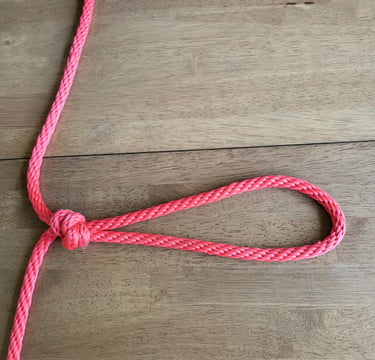
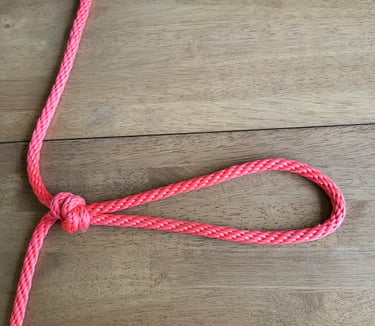
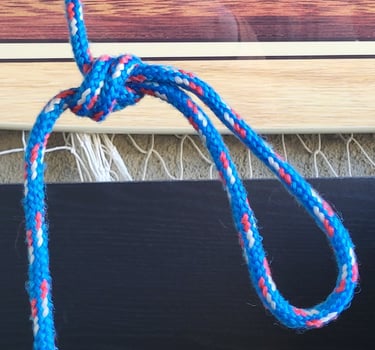
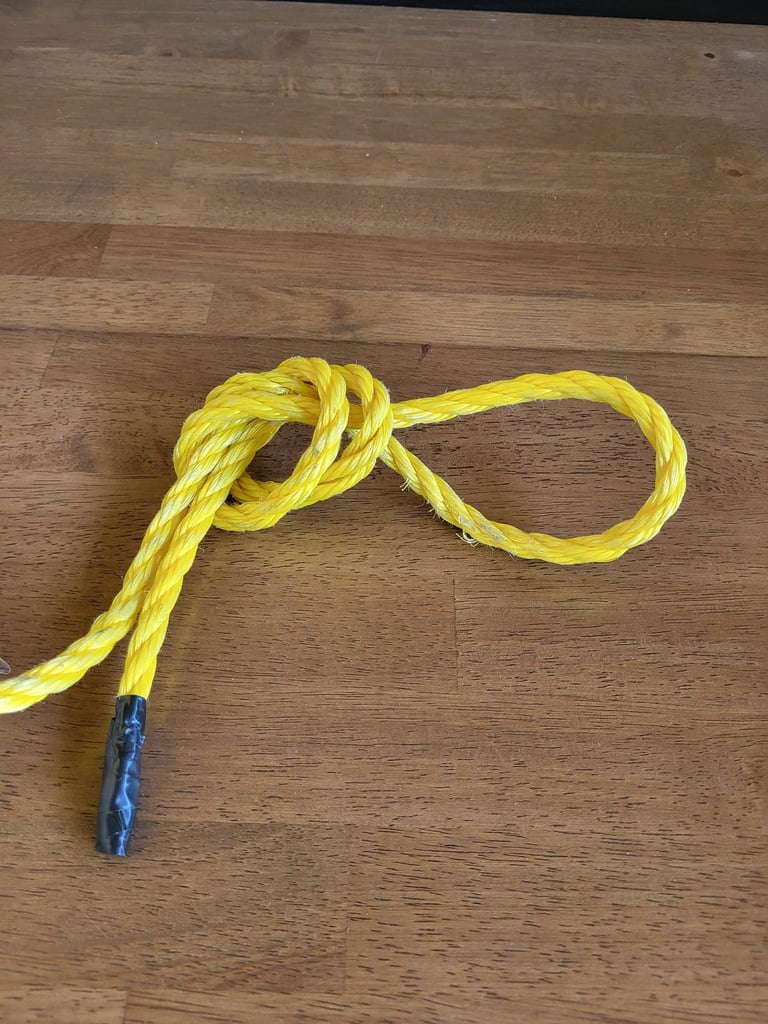
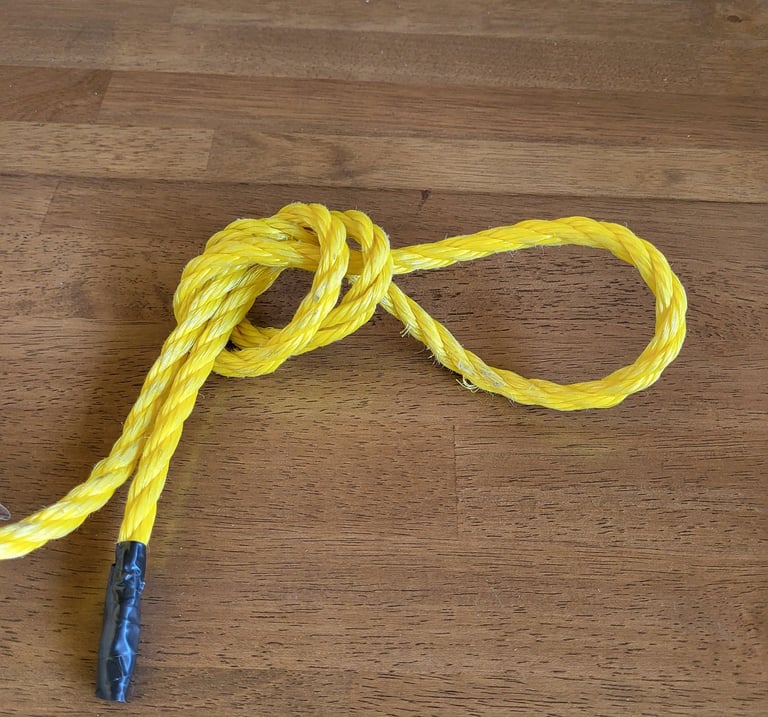
The overhand loop (also called an Overhand With a Bight) is the absolute simplest loop knot you can tie. It is basic, instinctive, and almost completely useless for professional trade work. While it serves as a foundational concept in knot-tying, relying on it in an industrial or high-voltage setting is a major mistake.
Why You Should Never Use It (And What to Use Instead)
The overhand loop has two critical flaws that make it hazardous for professional trade use:
The Jamming Issue: Once an overhand loop is subjected to significant tension—like a heavy wire pull—it welds itself shut. It jams so tightly under a load that you will almost certainly have to cut your rope to get it undone.
Severe Strength Reduction: It introduces a sharp bend in the line, reducing the overall breaking strength of your rope by up to 50-55%.
If you need a reliable loop for rigging, pulling, or material handling, use these professional alternatives instead:
The Bowline: The undisputed king of loop knots. It holds fast under heavy loads but remains incredibly easy to untie once the tension is released. It can be tied as an end loop or midline with the Bowline With a Bight variation. Learn how to tie the Bowline here.
The Span Loop: This is an incredibly simply and bulletproof loop. Unlike the overhand loop, the Span Loop never jams and can easily be untied. It is my go-to midline loop and Trucker’s Hitch pivot.
The Alpine Butterfly Loop: Considerably stronger than the overhand loop and far less prone to jamming after a heavy pull. It also can take a heavy load from either direction without rolling over or distorting. Check out my Alpine Butterfly loop guide here!
Now that you've learned about the overhand loop, skip it next time and tie something better!
How to Tie an Overhand Loop Knot
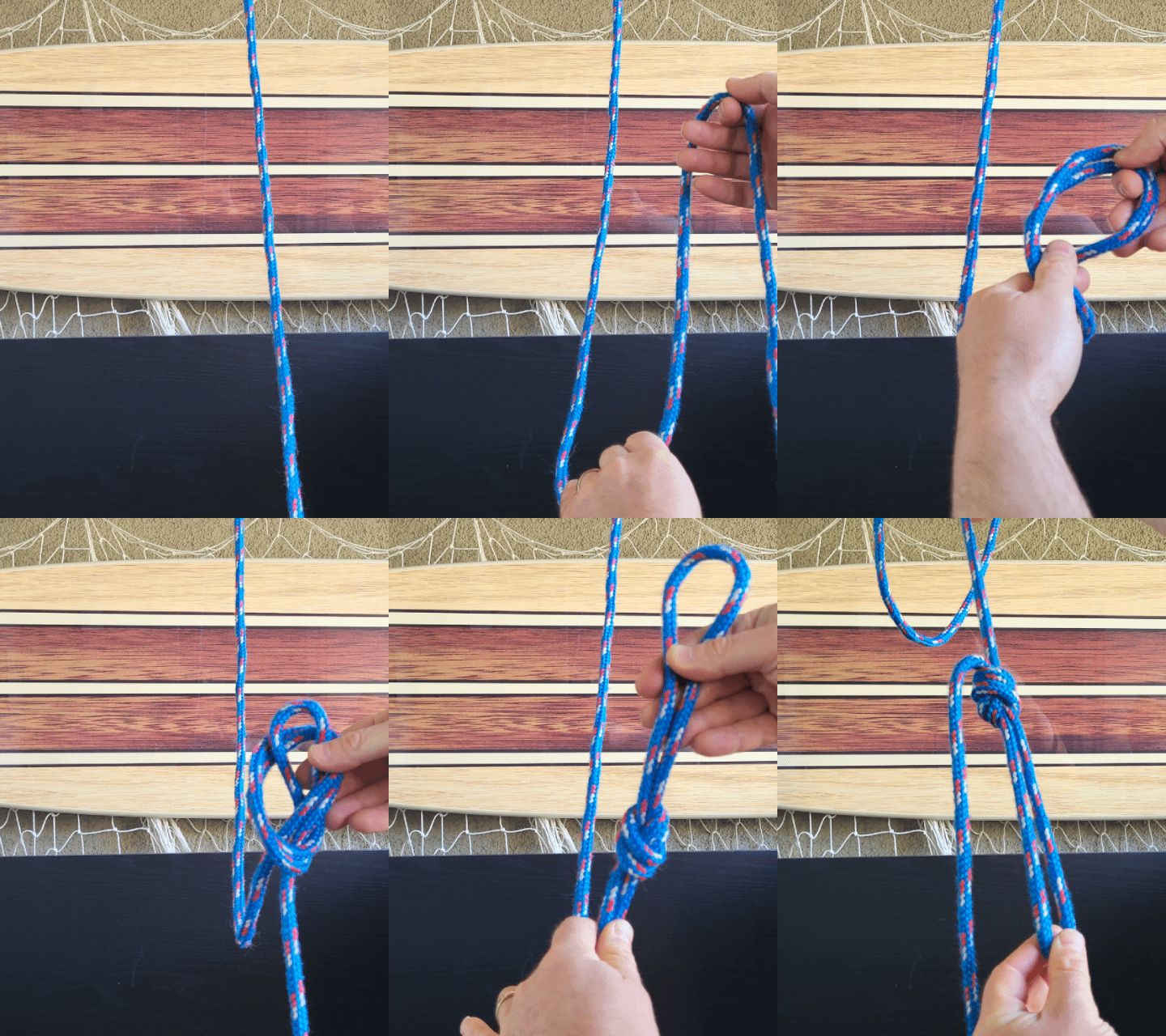
Tying an overhand loop requires nothing more than a basic overhand knot executed with a doubled piece of rope.
Form a bight: Fold the end of your rope back over itself to create a loop or a "bight." Treat this doubled section as a single strand.
Create a loop: Cross the working end of the bight over the standing line to form a simple loop.
Pass it through: Tuck the end of the bight through the loop you just created, moving from back to front.
Dress and tighten: Pull the loop and the two tail ends firmly to seat the knot securely.
Applications for Electricians
In industrial or commercial electrical work, the applications for this knot are virtually non-existent. You should never use an overhand loop for heavy wire pulling, rigging tools, or securing materials.
The primary reason to know this knot is simply to understand what not to do on a job site.
Safety Disclaimer: ⚠️ Material Handling Only
The knots and techniques demonstrated on this site are intended strictly for material handling, wire pulling, and equipment securement. > Never use these hitches and knots for life safety, fall protection, or overhead lifting of loads where a failure could result in injury or death. Always use OSHA-compliant, load-rated hardware (harnesses, shackles, and slings) for critical lifts. Your safety team is there for a reason—consult them for high-risk tasks. Master the craft, stay out of pinch points, respect the load, and live to tie knots another day.
Questions or tips? Reach out anytime. I would love to hear about new knots and techniques.
Check out my YouTube channel for knot tying, rigging tips, and other electrician related tutorials.
© 2025. All rights reserved.
I made this website by myself with Hostinger Website Builder. Try it and start building your idea, today.