Rope and Knot Terminology for Electricians and Rigging
Essential guide to rope anatomy and rigging terms for electricians. Learn the difference between hitches, bends, and knots. Rope and Knot Terminology guide.
Lee Brandt
1/29/20263 min read


Welcome to ElectricianKnots.com!
If you're new to the world of rigging, wire pulling, and cable management or if your a veteran just looking to polish your skills, you've come to the right place. In the electrical trade, a knot isn't just a piece of rope—it’s a vital tool.
Understanding basic terminology is the first step toward mastering the knots that make your job safer and more efficient. Think of this as your foundational glossary: the "start here" guide to speaking the language of ropes.
Why Terminology Matters on the Job Site
Just like electrical code, precise language is crucial. While many journeymen have their own slang, knowing the standard terms helps you:
Follow Instructions: Accurately understand rigging and knot-tying guides.
Communicate Clearly: Describe techniques to colleagues without confusion.
Learn Faster: Grasp the mechanics of how a knot actually holds.
Ensure Safety: Correctly identify load-bearing parts of a line versus the "slack."
Knot parts, pieces, and actions: What you need to know.
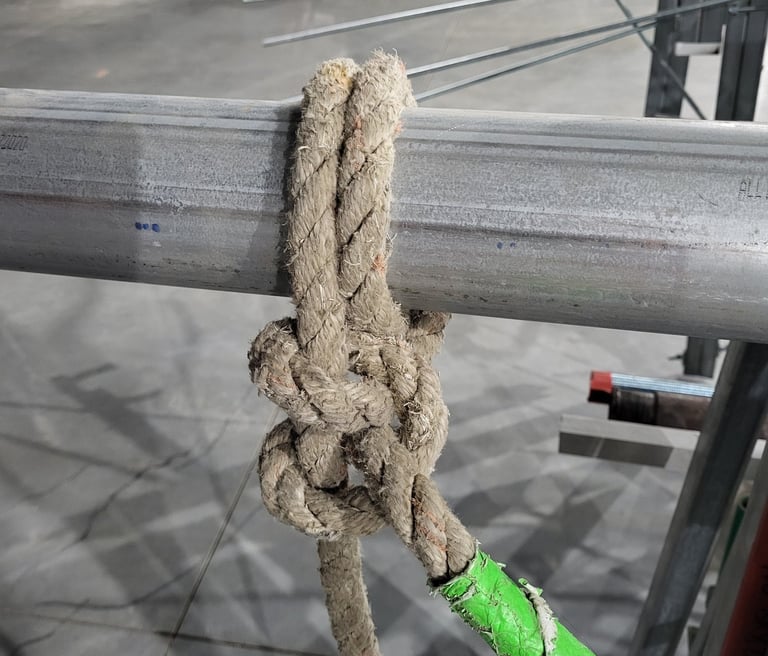
The Anatomy of a Rope
Before tying your first hitch, you need to know which end is which.
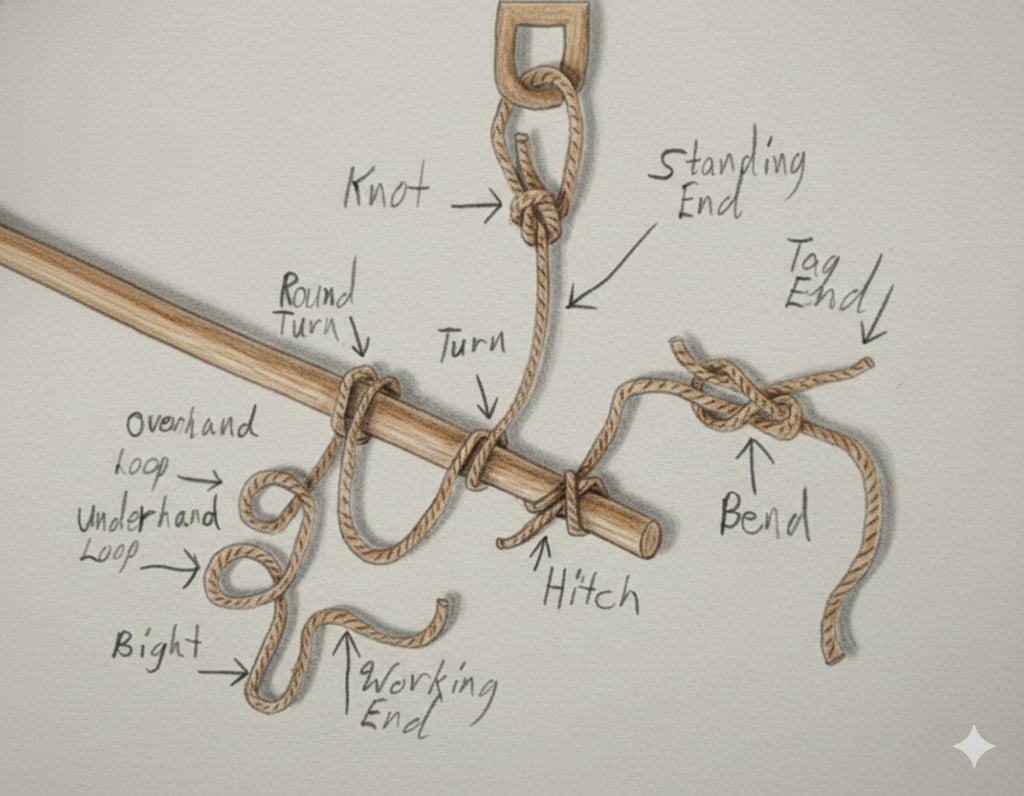
Standing Line (or Standing Part): The main, inactive part of the rope. This section isn't being manipulated; it’s usually the part under tension or connected to the load.
Working End: The active end of the rope you are using to tie the knot. This is the part you weave and manipulate.
Tag End: The very tip of the rope at the working end. Specifically, it refers to the excess "tail" leftover after a knot is secured.
Fundamental Shapes and Structures
All knots are built from these basic rope movements:
Bight: A simple "U" shape formed by folding the rope back on itself without crossing the ends.
Loop: Created when the rope crosses over itself to form a circle. These are classified as Overhand or Underhand based on which side the working end sits.
Turn: When a rope wraps around an object (like a piece of conduit) with at least 360 degrees of contact.
Round Turn: A wrap that goes 540 degrees around an object (one and a half times). This is the gold standard for creating friction before finishing a hitch.
Knots, Hitches, and Bends: What’s the Difference?
While often used interchangeably, these terms have specific technical meanings:
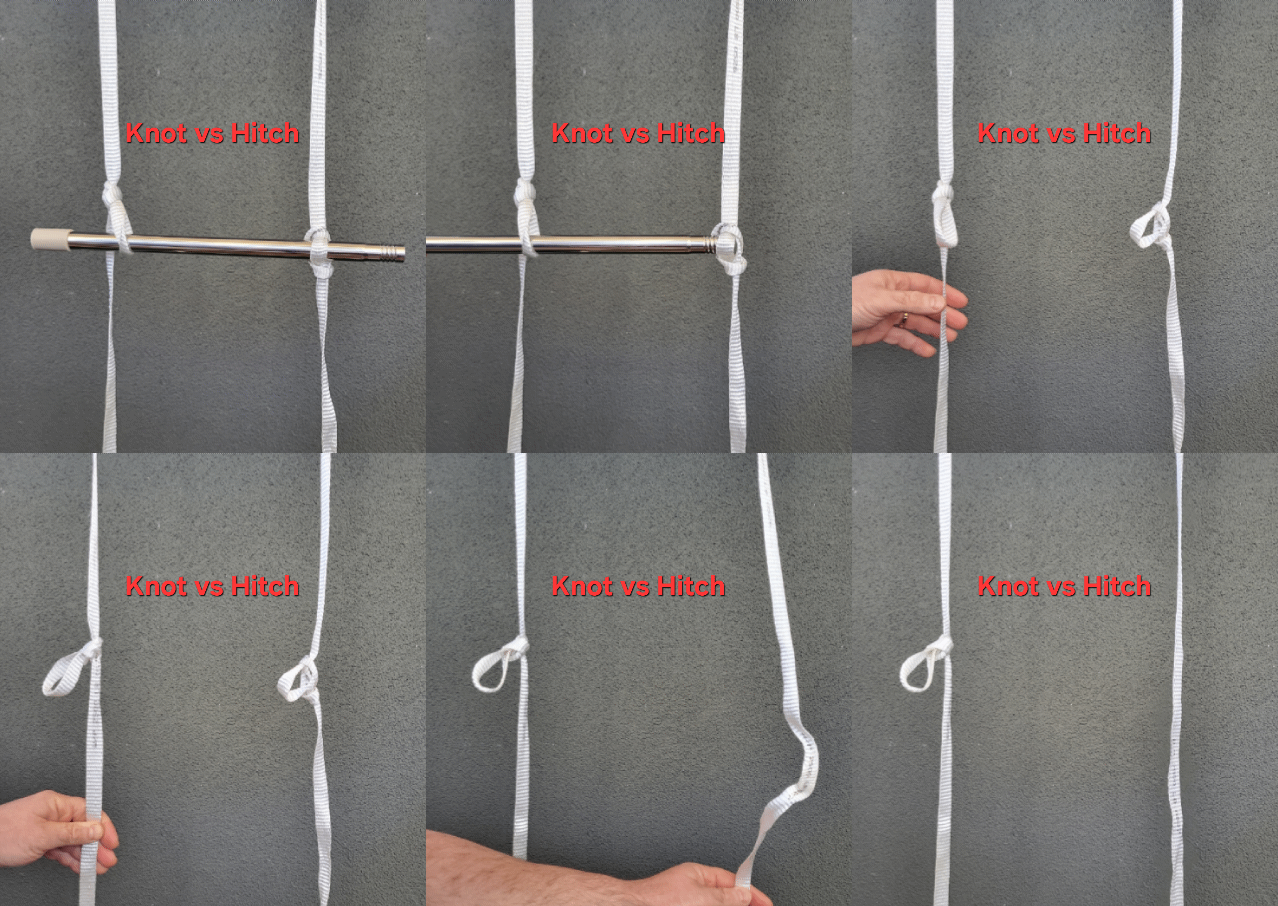
Knot: A self-sufficient entanglement tied in the rope itself (like a Stopper Knot). It doesn't need an outside object to keep its shape.
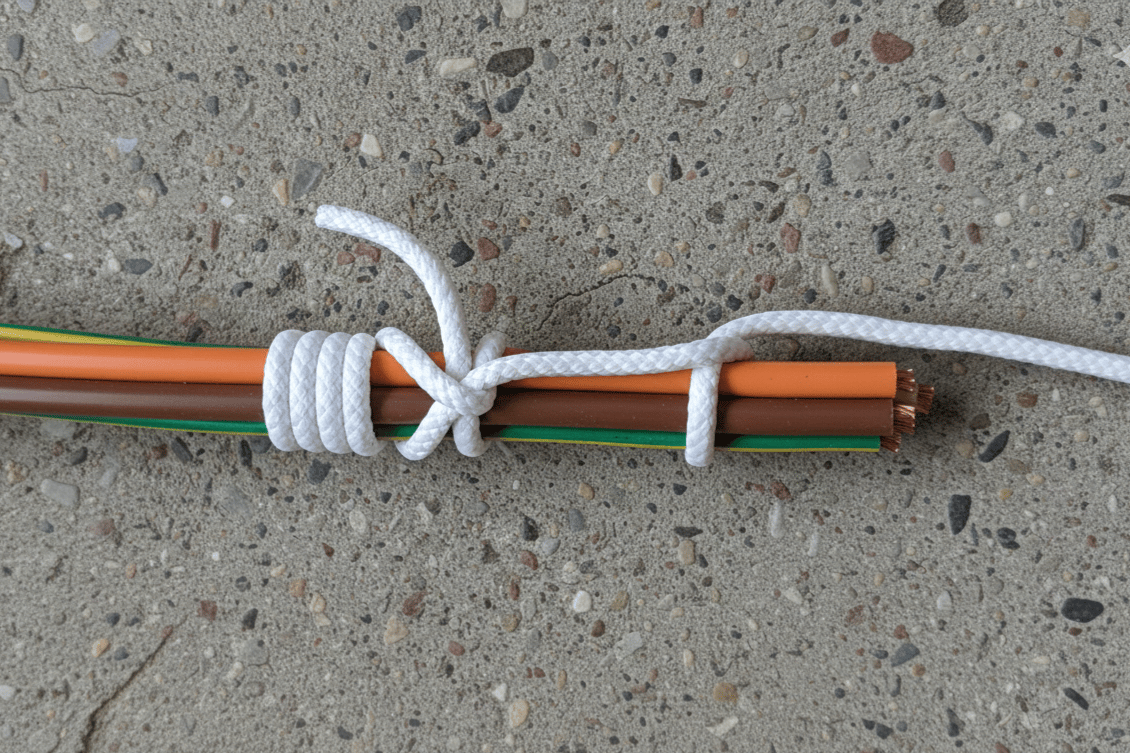
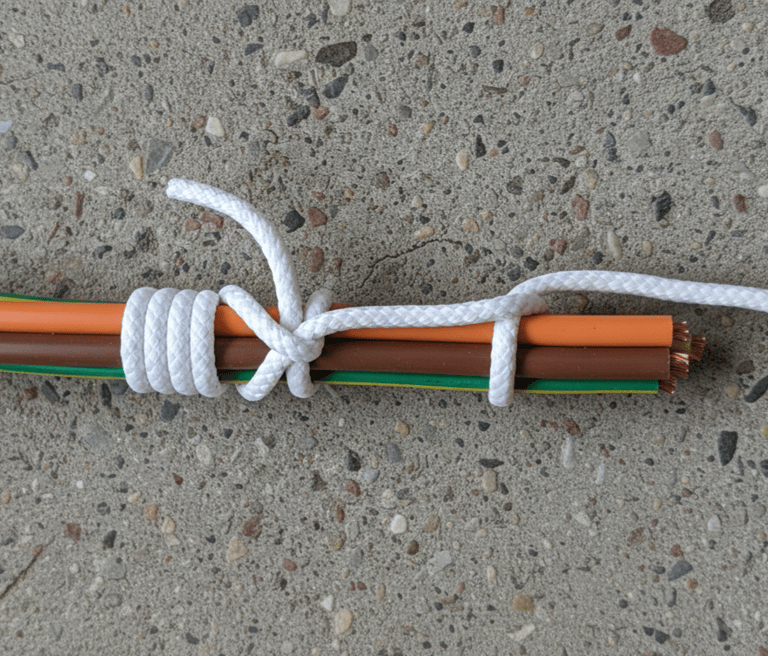
Hitch: A knot that secures a rope to an object, such as a pipe, a motor, or a structural beam. Crucial Tip: If you pull the object out and the knot falls apart, it’s a hitch. Common examples include the Clove Hitch for temporary attachments and the Icicle Hitch for wire pulls.
Bend: A knot used to join two separate ropes together to extend your length. The Sheet Bend is a classic example every electrician should know.
Perfecting the Tie: Knot Actions
These are the little steps that help your knot tying move to the professional level.
Dressing: Arranging the rope neatly so the "parts" sit correctly. A well-dressed knot is safer and easier to inspect.
Setting: The act of tightening the knot. If the shape deforms significantly during setting, untie it and start over.
Slipped: Tying a knot with a "quick-release" loop (like a bow on a shoe) so it can be untied instantly by pulling the tag end.
Summary for the Electrical Trade
Mastering this vocabulary is the backbone of rigging for safety, cable management, and heavy wire pulls. Stay tuned to ElectricianKnots.com as we dive into step-by-step tutorials for the specific hitches and bends you'll use every day on the clock. Now that you have a grasp on the vocabulary, let's have some fun and start tying!
Start here with the undisputed King of Knots... Bowline Knot
Or try this one to step up your wire pulling game... Schwäbisch Hitch
This knot is fun and you can tie it with one hand... Marlinspike Hitch
Safety Disclaimer: ⚠️ Material Handling Only
The knots and techniques demonstrated on this site are intended strictly for material handling, wire pulling, and equipment securement. > Never use these hitches and knots for life safety, fall protection, or overhead lifting of loads where a failure could result in injury or death. Always use OSHA-compliant, load-rated hardware (harnesses, shackles, and slings) for critical lifts. Your safety team is there for a reason—consult them for high-risk tasks. Master the craft, stay out of pinch points, respect the load, and live to tie knots another day.
Questions or tips? Reach out anytime. I would love to hear about new knots and techniques.
Check out my YouTube channel for knot tying, rigging tips, and other electrician related tutorials.
© 2025. All rights reserved.
I made this website by myself with Hostinger Website Builder. Try it and start building your idea, today.